Summary

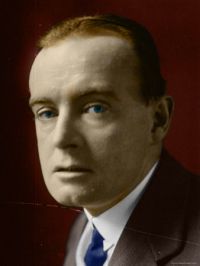
Portrait of Saki Saki The Toys of Peace and Other Papers… (1919)

Never, in any novel that she had read, had a defenceless young woman been confronted with a situation like this. Sir John, the Hugo of her imagination, was, if anything, rather more depraved and despicable than Robert Bludward. He was mean, evasive, callously indifferent to his country’s interests, a cheat, a man who habitually broke his word, and who was responsible, with his associates, for most of the poverty, misery, crime, and national degradation with which the country was afflicted.
Source: Wikisource

Portrait of Saki Saki The Toys of Peace and Other Papers… (1919)

Suddenly, however, their talk took a dramatically interesting turn, and Alethia listened with wide-eyed attention.
“What do you think of Mister Robert Bludward, eh?”
There was a certain scornful ring in his question.
“Robert Bludward? An out-an’-out rotter, that’s what he is. Ought to be ashamed to look any decent man in the face. Send him to Parliament to represent us—not much! He’d rob a poor man of his last shilling, he would.”
Source: Wikisource

Portrait of Saki Saki The Toys of Peace and Other Papers… (1919)

Their neighbours had been elderly and few, not much given to social intercourse, but helpful or politely sympathetic in times of illness. Newspapers of the ordinary kind were a rarity; those that Alethia saw regularly were devoted exclusively either to religion or to poultry, and the world of politics was to her an unheeded unexplored region. Her ideas on life in general had been acquired through the medium of popular respectable novel-writers, and modified or emphasised by such knowledge as her aunt, the vicar, and her aunt’s housekeeper had put at her disposal.
Source: Wikisource

Get perspective with Kwize: daily news enlightened by great literature