Summary

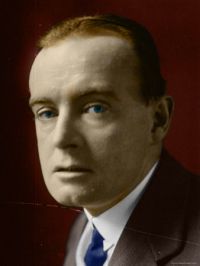
Portrait of Saki Saki The Toys of Peace and Other Papers… (1919)

It was that blessed season of the year when the asparagus and the plover’s egg are abroad in the land, and the oyster has not yet withdrawn into it’s summer entrenchments, and Sir Lulworth and his nephew were in that enlightened after-dinner mood when politics are seen in their right perspective, even the politics of Mexico.
“Most of the revolutions that take place in this country nowadays,” said Sir Lulworth, “are the product of moments of legislative panic. Take, for instance, one of the most dramatic reforms that has been carried through Parliament in the lifetime of this generation.
Source: Wikisource

Portrait of Saki Saki The Toys of Peace and Other Papers… (1919)

Anyhow, when Lena gave a rather gloomy account of the existing state of things in the Suffragette World, Waldo was not merely sympathetic but ready with a practical suggestion. Turning his gaze westward along the Mall, towards the setting sun and Buckingham Palace, he was silent for a moment, and then said significantly, ‘You have expended your energies and enterprise on labours of destruction; why has it never occurred to you to attempt something far more terrific?’
“‘What do you mean?’ she asked him eagerly.
Source: Wikisource

Portrait of Saki Saki The Toys of Peace and Other Papers… (1919)

What have your countrymen done to deserve such a thing?’
“‘They have refused us the vote,’ said Lena bitterly.
“The Prime Minister always declared himself an opponent of anything savouring of panic legislation, but he brought a Bill into Parliament forthwith and successfully appealed to both Houses to pass it through all its stages within the week. And that is how we got one of the most glorious measures of the century.”
“A measure conferring the vote on women?”
Source: Wikisource

Get perspective with Kwize: daily news enlightened by great literature