Summary

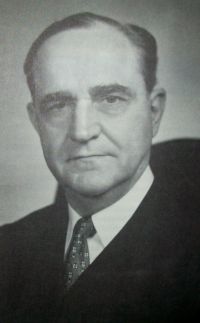
Portrait of Sherman Minton Sherman Minton Reed v. Pennsylvania Railroad Company…

But the interstate commerce in which respondent is engaged is interstate transportation. If 'any part' of petitioner's duties is in 'furtherance' of or substantially affects interstate commerce, it also is in 'furtherance' of or substantially affects interstate transportation. The test for coverage under the amendment is not whether the employee is engaged in transportation, but rather whether what he does in any way furthers or substantially affects transportation.
Source: Wikisource

Portrait of Sherman Minton Sherman Minton Reed v. Pennsylvania Railroad Company…

No argument is made that Congress could not constitutionally include petitioner within the coverage of the Act. The argument is that the amendment was narrowly drawn to remedy specific evils and that to construe it to include petitioner would amount to inclusion in the Act of virtually all railroad employees-a result which respondent assumes is unintended and undesirable. The argument takes several forms. First, it is said that 'commerce' in the Act means only transportation and that petitioner is not employed in transportation.
Source: Wikisource

Portrait of Sherman Minton Sherman Minton Reed v. Pennsylvania Railroad Company…

The Act has not been so interpreted, and the 1939 amendment specifically affords protection to 'any employee' whose duties bring him within that amendment. There is no basis in the language of § 1 for confining liability of the railroad so as to exclude any class of railroad employees as a class. The benefits of the Act are not limited to those who have cinders in their hair, soot on their faces, or callouses on their hands. Section 1 cannot be interpreted to exclude petitioner from its benefits without further consideration of the function she performs and its impact on interstate commerce.
Source: Wikisource

Get perspective with Kwize: daily news enlightened by great literature