Summary

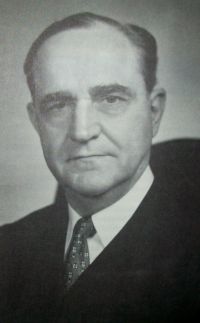
Portrait of Sherman Minton Sherman Minton Uebersee Finanz-Korporation Ag v…

It is suggested that vested property must be returned unless there is proof of actual use of the property for economic warfare against the United States. The crucial fact is not the actual use by an enemy-tainted corporation of its power in economic warfare against the United States. It is the existence of that power that is controlling and against which the Government of the United States may move. The Government does not have to wait for the enemy to do its worst before it acts.
Source: Wikisource

Portrait of Sherman Minton Sherman Minton Uebersee Finanz-Korporation Ag v…

However, under § 9 (a) of the Trading with the Enemy Act, one not an enemy, as defined in § 2 of said Act, can recover any interest, right, or title which he has in the property so vested. As construed by this Court in Clark v. Uebersee Finanz-Korp., A.G., supra, § 2 included in the word 'enemy' all corporations affected with an 'enemy taint.' Since we find petitioner to be so affected because of the direct and indirect control and domination by an enemy national, Wilhelm von Opel, petitioner cannot recover under § 9 (a) .
Source: Wikisource

Portrait of Sherman Minton Sherman Minton Uebersee Finanz-Korporation Ag v…

The latter, on October 17, 1931, sold the usufruct property to General Motors, in accordance with the contract which Wilhelm had with that company. In order to protect the several interests involved, the proceeds of the sale were transferred to petitioner, a Swiss corporation acquired by Fritz for this purpose. Eventually these funds were used to purchase stocks, later transferred to petitioner, in corporations organized under the various states of the United States, from which derived the stocks vested by the Alien Property Custodian. Fritz owned 97% of the stock of petitioner.
Source: Wikisource

Get perspective with Kwize: daily news enlightened by great literature