Summary

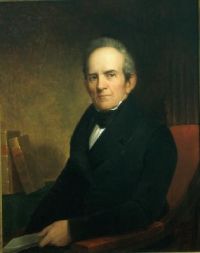
Portrait of Smith Thompson Smith Thompson Moore v. Bank of Columbia — Opinion of the Court

The court must supply something, if it is to be left to the court, though it is rather the province of the jury, and should have been left to the jury to infer what kind of money was meant. But if the inference is for the court, will they not understand by it the legal and usual currency of the country? Would they say that a man, speaking of a debt of five hundred to a bank dealing in dollars and cents only, meant pounds and not dollars.
Source: Wikisource

Portrait of Smith Thompson Smith Thompson Moore v. Bank of Columbia — Opinion of the Court

If there be accompanying circumstances which repel the presumption of a promise or intention to pay, if the expressions be equivocal, vague and indeterminate, leading to no certain conclusion, but at best to probable inferences, which may affect different minds in different ways, they ought not to go to a jury as evidence of a new promise to revive the cause of action. Any other course would open all the mischiefs, against which the statute was intended to guard innocent persons, and expose them to the danger of being entrapped in careless conversations.
Source: Wikisource

Portrait of Smith Thompson Smith Thompson Moore v. Bank of Columbia — Opinion of the Court

After the witness came into the room, and while sitting there looking at the newspapers, he overheard a conversation between the defendant and his two companions, in which they were bantering him about his independent circumstances, and his being so clear of debt or of the banks; when the defendant jumped up and danced about the room, exclaiming, 'Yes, except one damned five hundred in the Bank of Columbia, which I can pay at any time.' No part of this conversation was addressed to the witness, nor did he take any part in it.
Source: Wikisource

Get perspective with Kwize: daily news enlightened by great literature