Summary

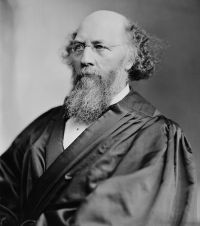
Portrait of Stephen Johnson Field Stephen Johnson Field Stanley v. Schwalby (147 U.S. 508…

Now, no such bar can be pleaded by the United States, for the reason that no action can be instituted against them without their express consent. They can have no occasion to plead such a statute, because they can always insist upon their immunity from judicial process. If they assent to the action, they, of course, do not wish the benefit of such a statute.
The cases where the government, state or national, without being named, may invoke the benefit of a law passed for priviate parties, applies to a very different class of cases from the one before us.
Source: Wikisource

Portrait of Stephen Johnson Field Stephen Johnson Field Stanley v. Schwalby (147 U.S. 508…

If the defendant admits that any other person, or that the government, has the title or owns the property at any time within the period of prescription, his adverse possession, on which alone he can rely, fails, and his claim of right to the property is defeated. This doctrine is sustained by the whole current of authorities in the English and American courts, as will be seen by reference to the treatise on the statute of limitations by Angell, and also to the one by Buswell, under the chapters on 'Adverse Possession,' where the adjudged cases are cited.
Source: Wikisource

Portrait of Stephen Johnson Field Stephen Johnson Field Stanley v. Schwalby (147 U.S. 508…

The whole theory upon which statutes of limitation are founded, whether for the repose of litigation, or upon presumption of performance, from lapse of time, of the obligations alleged, or from other causes, is that during the period prescribed by the statute the party has had full right, without legal hindrance, to prosecute his demand against the party invoking the bar of the statute, and has failed to do so.
Source: Wikisource

Get perspective with Kwize: daily news enlightened by great literature