Summary

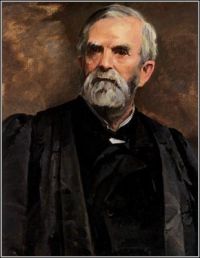
Portrait of William Burnham Woods William Burnham Woods Reynolds v. First National Bank of Crawfordsville Indiana…

The power to purchase the real estate in dispute was, therefore, clearly conferred by the statute. The fact that, in order to secure the same debt, it purchased other real estate not mortgaged to it, cannot affect the title to the land which it was authorized to purchase; but, if there was any force in this objection to the title, it could not be raised by the debtor, for where a corporation is incompetent by its charter to take a title to real estate, a conveyance to it is not void, but only voidable. The sovereign alone can object.
Source: Wikisource

Portrait of William Burnham Woods William Burnham Woods Reynolds v. First National Bank of Crawfordsville Indiana…

The appellant next complains of the decree rendered by the circuit court, and his first objection is that the court had no jurisdiction to quiet the title of the appellee, as against a deed averred by the bill, and not denied by the answer, to be void on its face. The contention is that a deed void on its face is not a cloud upon the title, and a claim of title under it is no ground for the interference of a court of equity.
Source: Wikisource

Portrait of William Burnham Woods William Burnham Woods Reynolds v. First National Bank of Crawfordsville Indiana…

The complainant always has the option of setting the case down for hearing on bill and answer, instead of filing a replication, and if the defendant neglects to enter the order for the dismissal of the suit for want of replication until after the cause has been set down for hearing on bill and answer, a motion by the defendant to dismiss the suit for want of replication is incongruous and untimely.
Source: Wikisource

Get perspective with Kwize: daily news enlightened by great literature