Replication, the process of duplicating genetic material or biological structures, underpins life’s continuity and adaptation. From Isaac Asimov’s exploration of spontaneous mutations in gene duplication to Renato Baserga’s detailed account of DNA copying during cell division, authors have examined its mechanisms and implications.
Thomas Cavalier-Smith highlights lateral gene transfer’s role in prokaryotic evolution, while John C. Wooley and colleagues discuss metagenomic challenges in reconstructing genomes. These perspectives collectively underscore duplication’s dual role as both a stabilizing force and a driver of biological innovation, revealing its centrality to understanding heredity, evolution, and the limits of genetic accuracy.
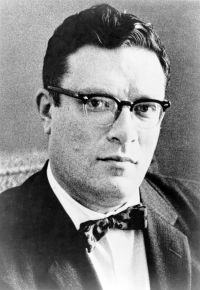 Isaac Asimov,
The Genetic Effects of Radiation
Isaac Asimov,
The Genetic Effects of Radiation