T. W. Rolleston

Biographical details

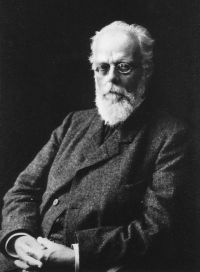
Portrait of T. W. Rolleston T. W. Rolleston The High Deeds of Finn and other Bardic Romances of Ancient Ireland

And so Oisín said to Niam, "Let me, for a short while, return to the land of Erinn, that I may see there my friends and kin and tell them of the glory and joy that are mine in the Land of Youth." But Niam wept and laid her white arms about his neck, entreating him to think no more of the sad world where all men live and move under a canopy of death, and where summer is slain by winter, and youth by old age, and where love itself, if it die not by falsehood and wrong, perishes many a time of too complete a joy.
Source: Gutenberg

Portrait of T. W. Rolleston T. W. Rolleston Myths & Legends of the Celtic Race

Conary himself is described as a youth; “the ardour and energy of a king has he and the counsel of a sage; the mantle I saw round him is even as the mist of May-day—lovelier in each hue of it than the other.” His golden-hilted sword lies beside him—a forearm's length of it has escaped from the scabbard, shining like a beam of light. “He is the mildest and gentlest and most perfect king that has come into the world, even Conary son of Eterskel ... great is the tenderness of the sleepy, simple man till he has chanced on a deed of valour.
Source: Gutenberg

Portrait of T. W. Rolleston T. W. Rolleston The High Deeds of Finn and other Bardic Romances of Ancient Ireland

Neither the sun nor the moon are specially worshipped. There are sun-heroes like Lugh, but no isolated sun-god. The great beauty of the cloud-tragedies of storm, the gorgeous sunrises and sunsets, so dramatic in Ireland, or the magnificence of the starry heavens, are scarcely celebrated. But the Irish folk have heard the sound of the wind in the tree-tops and marked its cold swiftness over the moor, and watched with fear or love the mists of ocean and the bewilderment of the storm-driven snow and the sweet falling of the dew.
Source: Gutenberg

Get perspective with Kwize: daily news enlightened by great literature