Heterogenesis

Definition and stakes

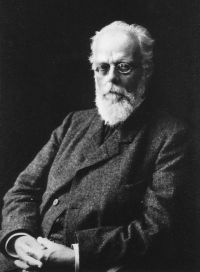
Portrait of Herbert Spencer Herbert Spencer,  The Principles of Biology, Volume 1…

“ After contemplating the several methods by which the multiplication of organisms is carried on—after ranging them under the two heads of Homogenesis, in which the successive generations are similarly produced, and Heterogenesis, in which they are dissimilarly produced—after observing that Homogenesis is nearly always sexual genesis, while Heterogenesis is asexual genesis with occasionally-recurring sexual genesis; we came to the questions—why is it that some organisms multiply in the one way and some in the other? ”
Source: Gutenberg

Portrait of Herbert Spencer Herbert Spencer,  The Principles of Biology — Chapter II.7 (1898)

“ How does it happen that some organisms multiply by homogenesis and others by heterogenesis? Why is it that where agamogenesis prevails it is usually from time to time interrupted by gamogenesis? A survey of the facts discloses certain correlations which, if not universal, are too general to be without significance.
Where multiplication is carried on by heterogenesis we find, in numerous cases, that agamogenesis continues as long as the forces which result in growth are greatly in excess of the antagonist forces.
”
Source: Wikisource

Portrait of Herbert Spencer Herbert Spencer,  The Principles of Biology, Volume 1…

“ The simplest form of heterogenesis is that seen in most uniaxial plants. If, as we find ourselves obliged to do, we regard each separate shoot or axis of growth as a distinct individual, homogenesis is seen in those which have absolutely terminal flowers; but in all other uniaxial plants, the successive individuals are not represented by the series A, A, A, A, &c., but they are represented by the series A, B, A, B, A, B, &c. ”
Source: Gutenberg

Get perspective with Kwize: daily news enlightened by great literature