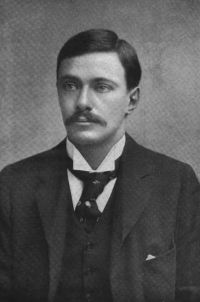
“ Training, in other words, in the bigger sense in which we wish to apply the term, has for its object not only fitness for any or for every athletic exercise, but fitness for all work mental as well as bodily. Yet it is nearly as much a mistake to devote all one’s time to keeping perfectly well, as it is to disregard health altogether. We believe, in fact, that certain rules of life, certain habits and certain daily exercises produce the state of body which we denote by the phrase being in Training, and that this adapts its owner, in so far as he is adaptable, for any work he has to do. ”
Fitness
Definition and stakes
Fitness, encompassing physical, mental, and emotional well-being, has been examined by various authors as a holistic pursuit of human potential. E.F. Benson emphasized exercise as a means to adapt to both psychological and bodily challenges, while S. Navaraj Chelliah and J. George Edward highlighted its reliance on heredity, nutrition, and scientific training approaches.
F.A. Wright connected it to ancient Greek practices of health and strength, and Sophie Cole emphasized its significance for aging and social vitality. George W. Bush described it as a cornerstone of active, healthy living. These viewpoints collectively illustrate fitness as an interdisciplinary endeavor, bridging physiology, philosophy, and societal values.
Quotes about “fitness”
S. Navaraj Chelliah and J. George Edward, Physical Fitness and Health (1989)
“ The components are also based on health and motor factors. The physical fitness is influenced by several factors such as heredity, that is form and structure of the body, nutrition, good health habits (sleep, rest, relaxation etc.) , emotional, spiritual and specific preparation for the game. Fitness can be developed through training methods and experiences. The training methods are based on scientific principles and philosophy of life. Physical conditioning brings confidence in the athlete's activity to play absolutely upto their potential. Special fitness for living. ”
“ Then, this first initiation into the science of physical fitness achieved, they returned to the city, and during the rest of their lives devoted a large proportion of their time to perfecting their knowledge of the laws of health and developing the strength of their body. ”





Related terms
Authors who wrote about “fitness”
Related articles
The civic duty to be fit: How presidential mandates turn physical health into 'physical patriotism'
From Eisenhower to Trump, US presidents have consistently promoted physical vigor as a requirement for national efficiency. An analysis of the utilitarian philosophy underlying these mandates reveals the philosophical tension between the state's pursuit of collective strength and the citizen's personal autonomy.
The clash of sporting ideals: Universal rights versus meritocratic exclusion
The institutional promise of universal empowerment clashes with the demanding logic of competitive frameworks. Sport is divided between systems prioritizing rehabilitation and social unity, and those focused on victory, physical selection, and dominance. Reconciling this schism requires a philosophical re-foundation.
