 Gloria Macapagal-Arroyo,
First Inaugural Address
(2001)
Gloria Macapagal-Arroyo,
First Inaugural Address
(2001)
“ We should promote solid traits such as work ethic and a dignified lifestyle, matching action to rhetoric performing, rather than grandstanding. ”
Lifestyle encompasses the behaviors, values, and orientations that define an individual or group's way of living, shaped by both material and immaterial factors. From Adler’s early conceptualization of “style of life” as a reflection of personality to contemporary analyses linking it to consumption and identity, the theme has evolved to highlight its role in shaping selfhood and cultural symbols.
Authors such as Gloria Macapagal-Arroyo emphasize its moral and ethical dimensions, while Agnes Giberne contrasts indulgent leisure with disciplined purpose. Anne Douglas Sedgwick examines cultural contrasts in work and idleness, and Seneca reflects on the abundance of resources enabling a fulfilling existence. These varied perspectives reveal lifestyle as a dynamic interplay between personal agency and societal structures, mediated by consumption, values, and environmental contexts.
Gloria Macapagal-Arroyo,
First Inaugural Address
(2001)
“ We should promote solid traits such as work ethic and a dignified lifestyle, matching action to rhetoric performing, rather than grandstanding. ”
Agnes Giberne, Life's little stage (1913)
“ A house-full of servants—no help wanted there; abundance of money; and life one endless round of pleasure! Riding, hunting, motoring, golfing, dancing, paying visits, travelling—nothing but amusement! ”
 Anne Douglas Sedgwick,
The Little French Girl
Anne Douglas Sedgwick,
The Little French Girl
“ And with this moral difference there went the difference in everything;—the sunlight and the shadows, the streets, the houses, and the people. Sunlight and shadows were blue-and-gold, strong and deep, and the forms they defined revealed, under their spell, a classic harmony. The people passing, intent on business, or sitting in front of the cafés, at ease in idleness, saw idleness and work as two quite different things, not to be confused; each yielding its own savour, its own satisfaction. ”
 Alexander Maclaren,
Expositions of Holy Scripture
Alexander Maclaren,
Expositions of Holy Scripture
“ But I do wish to press upon you all this question, Have you ever tried to think to yourself, 'Now what, after all, is this life that is budding within me and dawning before me—what is it, in its deepest reality, and what am I to do with it?'There are some of us to whom, so far as we have thought at all, life presents itself mainly as a shop, a place where we are to 'buy and sell, and get gain,' and use our evenings, after the day's work is over, for such recreation as suits us. ”
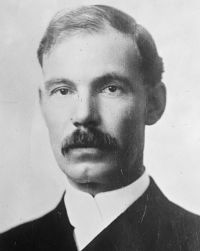 Edward Alsworth Ross,
The American Journal of Sociology
(1896)
Edward Alsworth Ross,
The American Journal of Sociology
(1896)
“ His estimates as to the relative worth of food, drink, shelter, cleanliness, ornament, safety, repose, action, offspring or power change with greater contact with other lives and fuller intercourse with men. The opportunity to compare experiences and gratifications leads to revision of values and modifies the intensity with which certain aims are pursued. Dormant desires are awakened by intercourse, suggestion and imitation multiply wants, the range of choice broadens, the standard of life develops, new stimulus is supplied to exertion, and the whole man is made over. ”
Samuel R. Wells, How to Behave: A Pocket Manual of Republican Etiquette…
“ The fashion of having a nice parlor, and then shutting it up all but three or four days in the year, when you have company; spending your own life in a mean room, shabbily furnished, or an unhealthy basement, to save your things, is the meanest possible economy. Go a little further—shut up your house, and live in a pig-pen! The use of nice and beautiful things is to act upon your spirit—to educate you and make you beautiful. ”
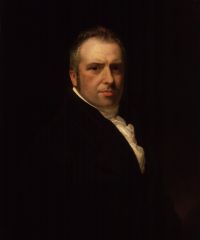 William Hone,
The Every-day Book and Table Book…
William Hone,
The Every-day Book and Table Book…
“ The consequence is, that I care nothing for wealth, provided I have competence; that I can take up my abode with pleasure among poor people, and not turn squeamish at sight of a fustian jacket; that I like the humour of farm-houses, and would dine with a couple of vagabonds, without fear of infection, amply compensated by the observation of their vein; and looking upon the beauty of nature as the source of all pleasure, far and wide as she extends, in this hole and cabin, my own appropriate spot, my aim is to keep my health as the furtherance of a superior object. ”
 Lucius Annaeus Seneca,
Seneca's Morals of a Happy Life…
Lucius Annaeus Seneca,
Seneca's Morals of a Happy Life…
“ Those innumerable delights for the entertainment of our eyes, our ears, and our understandings? nay, that copious matter even for luxury itself? For care is taken, not only for our necessities, but also for our pleasures, and for the gratifying of all our senses and appetites. So many pleasant groves; fruitful and salutary plants; so many fair rivers that serve us, both for recreation, plenty, and commerce: vicissitudes of seasons; varieties of food, by nature made ready to our hands, and the whole creation itself subjected to mankind for health, medicine and dominion. ”
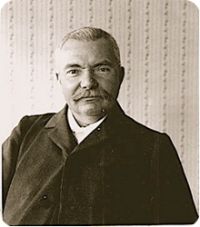 Charles Wagner,
The Simple Life
Charles Wagner,
The Simple Life
“ There one finds the respirable air, the illuminating light, normal heat, classic cookery, and, in moderation, so many other things without which it would not be worth the while to promenade this round ball.On the various rungs of the bourgeois ladder people reply to the question, what is necessary to live? by figures varying with the degree of their ambition or education: and by education is oftenest understood the outward customs of life, the style of house, dress, table—an education precisely skin-deep. ”
Charles Wagner,
The Simple Life
“ What material things does a man need to live under the best conditions? A healthful diet, simple clothing, a sanitary dwelling-place, air and exercise. I am not going to enter into hygienic details, [69] compose menus, or discuss model tenements and dress reform. My aim is to point out a direction and tell what advantage would come to each of us from ordering his life in a spirit of simplicity. To know that this spirit does not rule in our society we need but watch the lives of men of all classes. Ask different people, of very unlike surroundings, this question: What do you need to live? ”
graf Leo Tolstoy, What Shall We Do?
“ In answer to the question, whether this physical labour would deprive me of many innocent enjoyments proper to man, such as enjoyment of art, acquirement of knowledge, of social intercourse, and, generally, of the happiness of life, it was really quite the reverse: the more intense my physical labour, the more it approached that labour which is considered the hardest, to wit, agricultural labour, the more I acquired enjoyments, and knowledge, and the closer and more affectionate was my intercourse with mankind, and the more happiness did I feel in life. ”
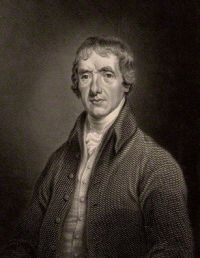 John Aikin,
Evenings at Home; Or, The Juvenile Budget Opened
John Aikin,
Evenings at Home; Or, The Juvenile Budget Opened
“ Let one boy have been playing at rolling snowballs, and another have been roasting himself before a great fire, and let them meet in the porch of the house;—if you ask them how they feel, I will answer for it you will find them as different in their accounts as the travellers on the Andes. But this is only one example of the operation of a universal principle belonging to human nature: for the power of habit is the same thing whatever be the circumstance which calls it forth, whether relating to the mind or the body. ”
 Agnes Blake Poor,
Boston Neighbours In Town and Out
Agnes Blake Poor,
Boston Neighbours In Town and Out
“ What a pleasant world, she wistfully thought, was the world of men—a world where conventionalities and duty calls gave way to a delicious, free, Bohemian existence of boating and running about; where even housekeeping was a thing lightly considered, and where dogs jumped on sofas, and people threw their things around at pleasure—nay, even smoked and swore, regardless of consequences temporal or eternal! ”
Samuel Smiles, Self Help; with Illustrations of Conduct and Perseverance
“ To them society owes many of its chief necessaries, comforts, and luxuries; and by their genius and labour daily life has been rendered in all respects more easy as well as enjoyable. Our food, our clothing, the furniture of our homes, the glass which admits the light to our dwellings at the same time that it excludes the cold, the gas which illuminates our streets, our means of locomotion by land and by sea, the tools by which our various articles of necessity and luxury are fabricated, have been the result of the labour and ingenuity of many men and many minds. ”
 Jean-Jacques Rousseau,
Emile, or On Education
(1762)
Jean-Jacques Rousseau,
Emile, or On Education
(1762)
“ To this end, the first use I should make of my wealth would be to purchase leisure and freedom, to which I would add health, if it were to be purchased; but health can only be bought by temperance, and as there is no real pleasure without health, I should be temperate from sensual motives. ”
B. G. Jefferis, Searchlights on Health: The Science of Eugenics
“ But an influence not less powerful than any of these is the growing devotion of fashion and luxury of this age, and the idea which practically obtains to so great an extent that pleasure, instead of the health or morals, is the great object of life. ”
Charles Greville, The Greville Memoirs, Part 2 (of 3…
“ And this is called society; and amongst such people I have lived, do live, and shall live—I who have seen, known, and had the choice of better things. Eating, drinking, and amusement is the occupation of these people's lives, and I am ashamed to say such has been mine. ”
 Hamilton Wright Mabie,
Under the Trees and Elsewhere
Hamilton Wright Mabie,
Under the Trees and Elsewhere
“ If the ideal conditions of life, of which most of us dream, could be realised, the result would be a padded and luxurious existence, well-housed, well-fed, well-dressed, with all the winds of heaven tempered to indolence and cowardice. ”
Mary Wollstonecraft Shelley, The Last Man
“ If mere existence, and not happiness, had been the final end of our being, what need of the profuse luxuries which we enjoy? Why should our dwelling place be so lovely, and why should the instincts of nature minister pleasurable sensations? The very sustaining of our animal machine is made delightful; and our sustenance, the fruits of the field, is painted with transcendant hues, endued with grateful odours, and palatable to our taste. ”
Samuel Henry Prince, Catastrophe and Social Change
“ The standard of living has been defined as the “mode of activity and scale of comfort which a person has come to regard as indispensable to his happiness and to secure and retain which he is willing to make any reasonable sacrifice.” ”
 John Boyle O'Reilly,
Athletics and Manly Sport
(1890)
John Boyle O'Reilly,
Athletics and Manly Sport
(1890)
“ Say what you will there is no other form of outing that makes possible, within sight of conventional life and labor, such days and nights of utter freedom, health, natural beauty, and manly enjoyment. ”
 Matilde Serao,
The Desire of Life
Matilde Serao,
The Desire of Life
“ Even all these toilers of the luxury, pleasure, and intoxication of life, these humble, unknown workers were there in cast-off clothes, with faces still pale from interrupted sleep, with the tired air of those who are deprived of rest ”
William James, Talks To Teachers On Psychology…
“ They talk of the smoking-habit and the swearing-habit and the drinking-habit, but not of the abstention-habit or the moderation-habit or the courage-habit. But the fact is that our virtues are habits as much as our vices. All our life, so far as it has definite form, is but a mass of habits,—practical, emotional, and intellectual,—systematically organized for our weal or woe, and bearing us irresistibly toward our destiny, whatever the latter may be. ”
 W. H. Hudson,
A Shepherd's Life: Impressions of the South Wiltshire Downs
W. H. Hudson,
A Shepherd's Life: Impressions of the South Wiltshire Downs
“ It is this life of simple, unchanging actions and of habits that are like instincts, of hard labour in sun and wind and rain from day to day, with its weekly break and rest, and of but few comforts and no luxuries, which serves to bind man and wife so closely. ”
“ We would now direct your attention to habit—one of the most obvious and important elements in the formation of character. Its influence is felt in every sphere of your activity, its power extends to every faculty of your nature, and affects your personal, social, civil, and religious thought, feeling, and conduct. The nature of habit may be considered in two lights: first, an ease and excellence in doing a thing from having done it frequently ”
Edna Worthley Underwood, The taste of honey (1930)
“ The longer it is, the better! When only a few, as in his day, were educated, had leisure, money, idleness, luxurious living, they surpassed the men of my day, in range of pleasure, in mental power, in completeness. ”
B. G. Jefferis, Searchlights on Health: The Science of Eugenics
“ Industry the Sign of Nobility.—Marry a working, industrious young lady, whose constitution is strong, flesh solid, and health unimpaired by confinement, bad habits, or late hours. Give me a plain, home-spun farmer's daughter, and you may have all the rich and fashionable belles of our cities and villages. ”
 William Morris,
Signs of Change
William Morris,
Signs of Change
“ We must begin to build up the ornamental part of life—its pleasures, bodily and mental, scientific and artistic, social and individual—on the basis of work undertaken willingly and cheerfully, with the consciousness of benefiting ourselves and our neighbours by it. ”
Rachel Hayward, The Hippodrome
“ How strange it would seem to live in a civilised fashion again, to not be obliged to look at every sou before it was spent, to have servants to wait upon one; enough to eat and drink, and the luxury of cleanliness. ”
Gerald Stanley Lee, The Voice of the Machines
“ I find myself saying one minute, “Are not the whole human race my house-servants? Is not London my valet—always at my door to do my bidding? Clouds do my errands for me. It takes a world to make room for my body. My soul is furnished with other worlds I cannot see.” ”
 Thorstein Veblen,
The Theory of the Leisure Class
(1899)
Thorstein Veblen,
The Theory of the Leisure Class
(1899)
“ That is to say, in a general way, the most ancient and ingrained of the habits which govern the individual's life—those habits that touch his existence as an organism—are the most persistent and imperative. ”
 George Wharton James,
Quit Your Worrying!
George Wharton James,
Quit Your Worrying!
“ I have always believed that simpler, plainer living than most of us indulge in, more open air life, sleeping, working, living out of doors, more active, physical exercise of a useful character, would be beneficial. ”
Pye Henry Chavasse, Advice to a wife and mother in two parts (1881)
“ He observes: “Hence it is that one seldom sees in cities, courts, and rich houses, where people eat and drink, and indulge in the pleasure of appetite, that perfect health and athletic soundness and vigor which is commonly seen in the country, in the poor houses and cottages, where nature is their cook and necessity is their caterer, where they have no other doctor but the sun and fresh air, and no other physic but exercise and temperance.” ”
Emory Adams Allen, The Golden Gems of Life; Or, Gathered Jewels for the Home Circle
“ To the man of business home should be an earthly paradise, to the embellishment of which his leisure time and thoughts might well be devoted. Life is certainly a pleasanter thing if the inevitable daily drudgery be relieved by a little lightness, brightness, and intelligent enjoyment. ”
 Anna C. Brackett,
The Education of American Girls
Anna C. Brackett,
The Education of American Girls
“ III. As conducive to the maintenance of health, we find, first, remarkable regularity of habits, which is largely due to the fixedness, or caste state of society, that keeps people in the same grade of life into which they [Pg 220] are born; that is, in conditions where they have no occasion to change their habits, and where they have little opportunity for seeing any habits, except those to which they conform. ”
Katherine Jewell Everts, Vocal Expression: A Class-book of Voice Training and Interpretation
“ Do you sigh for books and leisure and wealth? It takes more "concentration" to use books—head tools—well than to use hand tools. It takes more "self-control" to use leisure well than workdays. Compare the Sundays and Mondays of your city; which day, all things considered, stands for the city's higher life,—the day on which so many men are lolling, or the day on which all toil? ”
J. M. Judy, Questionable Amusements and Worthy Substitutes
“ By attractive method in the use of life, activity, exercise, we mean that which appeals to one's peculiar desires, tastes, and circumstances, so long as these are normal and right. Some chosen profession, trade, or work is the rightful heritage of every person. Each man, woman, and child should know when he gets up of a morning, what his work is for that day. ”
 Charles James Lever,
Roland Cashel, Volume I (of II)
Charles James Lever,
Roland Cashel, Volume I (of II)
“ I know just as little of what wealth will do, and what it will not do. Tell me, therefore, in a few words, what other men, situated as I am, would pursue,—what habits they would adopt, how live, and with whom. ”
Charles J. Callan, Moral Theology
“ Natural means of cultivating an even temper and a buoyant disposition are: some kind of labor or occupation, avoidance of hurry and worry in one’s affairs, cultivation of some interesting hobby or avocation that will vary the monotony of business or work, use of congenial recreations, whether of a more refined (e.g., conversation with friends, literature, music, art, the drama, travel to historic or beautiful scenes, etc.) ”
Cecil B. Hartley, The Gentlemen's Book of Etiquette and Manual of Politeness
“ Watch each of your actions, when in society, that all the habits which you contract there may be useful and good ones. Like flakes of snow that fall unperceived upon the earth, the seemingly unimportant events of life succeed one another. ”
 Paul Carus,
Gospel of Buddha
(1917)
Paul Carus,
Gospel of Buddha
(1917)
“ And when the wealthy man expressed his willingness to learn, the Blessed One said: "There are five things which produce the condition of which thou complainest: opulent dinners, love of sleep, hankering after pleasure, thoughtlessness, and lack of occupation. Exercise self-control at thy meals, and take upon thyself some duties that will exercise thy abilities and make thee useful to thy fellow-men. ”
 David Hume,
An Enquiry Concerning the Principles of Morals
(1751)
David Hume,
An Enquiry Concerning the Principles of Morals
(1751)
“ How little is requisite to supply the necessities of nature? And in a view to pleasure, what comparison between the unbought satisfaction of conversation, society, study, even health and the common beauties of nature, but above all the peaceful reflection on one's own conduct; what comparison, I say, between these and the feverish, empty amusements of luxury and expense? These natural pleasures, indeed, are really without price; both because they are below all price in their attainment, and above it in their enjoyment. ”
