AI-generated from sources
The clash of sporting ideals: Universal rights versus meritocratic exclusion
In Brief
- Modern sport operates under a fundamental tension between the rehabilitative ideal of universal access for disabled individuals and the historical ethos of meritocratic, exclusionary competition.
- The competitive paradigm, rooted in the pursuit of physical perfection and victory ('winner-take-all'), relies on a 'discriminatory physical selection' process inherently opposed to universal inclusion.
- Parasports, while promoting humanism and equality, often replicate elite, performance-driven structures as they become institutionalized, creating their own parallel performance hierarchies.
- Reconciliation requires re-founding the philosophy of sport on the principle of the 'oneness of mankind' and embracing 'cooperative competition' over physical dominance.
Sport is often presented as a powerful engine for social good, embodying ideals of equality, health, and personal development. For people with disabilities, participation in sports is framed not merely as recreation, but as a fundamental right integral to rehabilitation, self-realization, and social integration [1, 2]. This perspective views physical activity as a guaranteed service that promotes physical and mental well-being, allowing individuals to explore their potential and achieve a successful life [3]. The care and opportunities provided through parasports are thus held up as a significant marker of social progress [4].
This inclusive vision, however, exists in tension with the dominant paradigm of competitive sport, which is historically rooted in ideals of physical superiority, merit-based selection, and relentless competition [5, 6]. This model valorizes the perfectly developed body, achieved through grueling discipline and specialized training designed to mold athletes into highly efficient performers [7, 8, 9]. The logic of this system is inherently hierarchical, culminating in a 'winner-take-all' ethos that rewards peak performance and physical conformity, a stark contrast to the principle of universal participation [10].
The central conflict, therefore, arises from the collision of these two opposing philosophies. How can the institutional promise of sport as a universal instrument of empowerment and equality for people with disabilities be reconciled with the competitive frameworks that prioritize standardized physical rigor and exclusion? . This question forces an examination of the very purpose of sport: is it a platform for demonstrating physical supremacy, or a universal medium for fostering human potential, social unity, and mutual respect, regardless of physical ability? The answer involves navigating the deep-seated cultural values embedded in the arena of competition .
The rehabilitative and social ideal of parasports
In many contexts, sports for people with disabilities are formally incorporated into national strategies for health and rehabilitation, positioning them as a fundamental right rather than a peripheral activity . Governments have been tasked with ensuring equal participation, integrating physical activities into rehabilitation services, and even providing in-home support for those with severe disabilities [11]. This approach is grounded in the belief that every individual should have access to the means of improving their health and achieving their potential . The development and promotion of parasports is thus presented as a tangible measure of a society's commitment to humanism and the protection of rights for all its members .
The benefits for the individual are described as transformative, extending far beyond mere physical fitness. Participation in sports is seen as a vehicle for mitigating functional impairments, increasing the capacity for self-support, and improving overall quality of life . Through structured athletic activities, individuals with disabilities can build self-esteem, confidence, and independence . These programs provide an opportunity to learn new skills, use specialized equipment, and engage in social exchange, fostering a more positive mindset and inspiring a greater passion for life [12].
Beyond individual empowerment, this model of sport is championed as a catalyst for profound societal change. By bringing parasports into communities and homes, these initiatives aim to increase public understanding and foster a culture of respect and care for persons with disabilities [13, 14]. The visibility of parasports helps embed concepts of 'equality, participation and sharing' into the social fabric, promoting traditional cultural values such as inclusion and helping the weak . The ultimate goal is the full integration of disabled individuals into society on an equal basis, facilitated by dedicated community centers and widespread public support .
The unyielding logic of competitive sport
In stark contrast to the inclusive ideal, the traditional ethos of competitive sport, particularly in physically demanding games like football, is built on a foundation of meritocracy, intense rivalry, and physical dominance [15]. This world is not primarily about participation but about victory. It is described as a 'field of battle' where opponents meet 'face to face' in a contest of strength and will [16]. Success demands not only competency and accuracy but also a 'fearless execution' and an unyielding spirit [17]. The history of such sports is filled with tales of 'sanguinary' battles, where teams fight desperately and hero-worship is reserved for those who secure a decisive victory [18, 19].
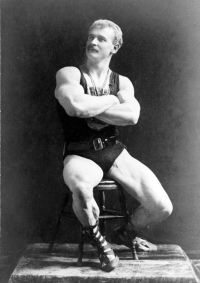
At the core of this model is the systematic cultivation of the body as a high-performance machine. An athlete's physique is expected to be a 'perfect mass of muscle', sculpted through rigid, persistent discipline and specialized exercises that target every part of the body [20]. The training regimen for elite athletes is severe, often involving months of spare diet and hard daily exercises to remove any superfluous flesh . This process amounts to a form of 'discriminatory physical selection', where athletes are created 'almost from scratch' to meet the specific demands of their sport, a practice driven by the relentless requirement for efficiency .
The culture surrounding this competitive paradigm emphasizes character building through adversity and sacrifice [21]. A mantra of 'If you won't be beat, you can't be beat' is used to instill 'iron' into the souls of players, pushing them past their breaking points [22]. This environment fosters unselfishness for the sake of the team's victory but also demands a nerve and aggression where showing a 'white feather' is grounds for expulsion [23]. While this may build character, its inherent brutality and exclusionary focus on physical prowess stand in direct opposition to the ideals of universal access and gentle rehabilitation [24].
Reconciling universal rights with competitive paradigms
The fundamental schism lies between two value systems. One champions sport as a universal right aimed at fostering health, equality, and social harmony . The other defines sport as a structured contest where the goal is winning, a pursuit that inevitably leads to physical selection and the creation of hierarchies based on performance . This raises a critical question: can a system predicated on the 'survival of the fittest' logic of competition genuinely serve as a tool for universal inclusion and well-being? . The very nature of competitive sport, which often degenerates into a confrontation of nerves and pride, seems antithetical to the goal of creating an equitable arena for all .
A potential path toward reconciliation lies in grounding the philosophy of sport in the principle of the 'oneness of mankind' [25, 26]. This concept, supported by human sciences, recognizes a single human species, infinitely varied in its secondary aspects . Adopting this view requires abandoning all prejudices that allow one group to consider itself superior to another, including those based on physical ability . Applied to sports, this principle would challenge the primacy of physical conformity and instead elevate the right of every individual to participate and develop their potential [27]. The focus would shift from what the body is to what it can do and become.
Parasports exist within this complex tension. On one hand, they are a powerful symbol of inclusion and adaptation. On the other, as they become more institutionalized, they inevitably adopt the structures of elite competition. Preparing for events like the Paralympic Games involves training athletes, improving skills, and striving for victory, mirroring the meritocratic model of able-bodied sports [28]. In doing so, parasports create their own performance hierarchies and standards of physical excellence. This creates a parallel system that champions universal participation while simultaneously engaging in a specialized form of physical selection to identify and cultivate elite athletes .
Ultimately, this dilemma forces a re-evaluation of the purpose of sport itself. If the aim is simply to perfect the physique as an end in itself, then competition and exclusion are logical outcomes [29]. However, if sport is meant to serve a broader function of social and moral development, then its methods must align with those goals [30]. An ethical framework that prioritizes 'cooperative competition' and gives every individual a fair chance for self-assertion could transform the arena . This would require redefining victory not merely as dominance over an opponent, but as personal growth, resilience, and the shared pursuit of excellence in a diverse and inclusive community .
The modern landscape of sport is defined by a profound ideological conflict. The vision of sport as a universal right—a tool for rehabilitation, social integration, and the empowerment of people with disabilities—offers a compelling narrative of progress and humanity . This ideal, however, clashes with the deeply ingrained ethos of competitive sport, a world governed by meritocratic selection, physical perfection, and an unwavering focus on victory . Parasports embody this conflict, simultaneously promoting broad participation while replicating the elite, performance-driven structures of the very system they seek to provide an alternative to .
Resolving this tension may not require the abolition of competition, but rather its re-foundation upon principles of human unity and mutual respect . When sport is viewed not as a test of conformity to a single physical standard, but as a diverse field for human expression, its potential can be more fully realized. By shifting the focus from exclusion to inclusion, from mere winning to the process of striving, the arena can evolve from a Darwinian proving ground into a genuine platform for celebrating the limitless potential of the human spirit in all its forms .