“ It is certainly not worth while to sit and consider how noble you are and what few opportunities you have, nor is it worth while to sit and consider—except very occasionally—how base you are and how many opportunities you have. Instead, go and take one of them. Do something, whether you suffer from headache or atheism, do something, make boots—even very badly like Tolstoi—or make history like Napoleon, or make geography like Livingstone. Whatever your age is, there should be something you like, which is not harmful. Do it, with both hands, for there is health—work! ”
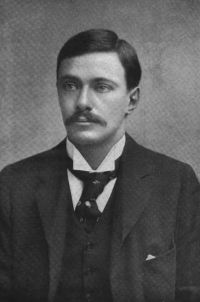
E. F. Benson
Summary
E. F. Benson’s Daily Training is a treatise on the interplay between physical activity and mental discipline, advocating for structured routines to enhance health and vitality. Published in an era emphasizing athletic and hygienic reforms, the text explores themes of exercise, diet, and the harmonious relationship between body and mind.
Benson underscores the necessity of consistent training—whether through gymnastics, sports, or breathing exercises—to cultivate both physical resilience and mental strength. His arguments, grounded in practical advice and philosophical reflection, stress that true fitness demands balance, rejecting extremes of idleness or overexertion. By weaving scientific insight with motivational rhetoric, Benson positions daily training as a cornerstone of a wholesome, purposeful life.
Quotes from Daily Training (E. F. Benson)
“ For it is at these cold and shuddering moments, which no one can hope to meet with more than stolidity, that one needs to have all one’s wits about one, to be able to keep one’s nerve, and to have one’s strong points at one’s fingers’ ends, and one’s weak points (we all have these, and the better one grows at any particular sport, the more glaring they seem proportionately to become) anyhow passably defended. ”
“ Training, in other words, in the bigger sense in which we wish to apply the term, has for its object not only fitness for any or for every athletic exercise, but fitness for all work mental as well as bodily. Yet it is nearly as much a mistake to devote all one’s time to keeping perfectly well, as it is to disregard health altogether. We believe, in fact, that certain rules of life, certain habits and certain daily exercises produce the state of body which we denote by the phrase being in Training, and that this adapts its owner, in so far as he is adaptable, for any work he has to do. ”
