Gamogenesis

Definition and stakes

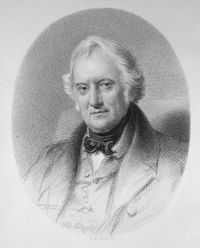
Portrait of Herbert Spencer Herbert Spencer,  The Principles of Biology — Chapter II.7 (1898)

“ Among animals, too, the anomalous case of the Tineidæ, a group of moths in which parthenogenetic multiplication goes on for generation after generation, seems to imply that gamogenesis does not necessarily result from an approximate balance of assimilation by expenditure. What we must say is that an approach towards equilibrium between the forces which cause growth and the forces which oppose growth, is the chief condition to the recurrence of gamogenesis; but that there appear to be other conditions, in the absence of which approach to equilibrium is not followed by gamogenesis. ”
Source: Wikisource

Portrait of Herbert Spencer Herbert Spencer,  The Principles of Biology — Chapter II.10 (1898)

“ Darwin remarks, "intercrossing plays a very important part in nature in keeping the individuals of the same species, or of the variety, true and uniform in character:" the idiosyncratic divergences obliterate one another. Gamogenesis, then, is a means of turning to positive advantage the individual differentiations which, in its absence, would result in positive disadvantage. ”
Source: Wikisource

Portrait of Herbert Spencer Herbert Spencer,  The Principles of Biology, Volume 1…

“ Hence, while a state of rapid growth indicates such a play of forces among the units of an aggregate as will produce active re-distribution, the diminution and arrest of growth shows that the units have fallen into such relative positions that re-distribution is no longer so facile. When, therefore, we see that gamogenesis recurs only when growth is decreasing, or has come to an end, we must say that it recurs only when the organic units are approximating to equilibrium—only when their mutual restraints prevent them from readily changing their arrangements in obedience to incident forces. ”
Source: Gutenberg

Get perspective with Kwize: daily news enlightened by great literature