Summary

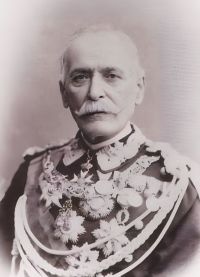
Portrait of Luigi Federico Menabrea Luigi Federico Menabrea Sketch of the Analytical Engine invented by Charles Babbage… (1843)

In abstract mathematics, of course operations alter those particular relations which are involved in the considerations of number and space, and the results of operations are those peculiar results which correspond to the nature of the subjects of operation. But the science of operations, as derived from mathematics more especially, is a science of itself, and has its own abstract truth and value; just as logic has its own peculiar truth and value, independently of the subjects to which we may apply its reasonings and processes.
Source: Gutenberg

Portrait of Luigi Federico Menabrea Luigi Federico Menabrea Sketch of the Analytical Engine invented by Charles Babbage… (1843)

Again, who can foresee the consequences of such an invention? In truth, how many precious observations remain practically barren for the progress of the sciences, because there are not powers sufficient for computing the results! And what discouragement does the perspective of a long and arid computation cast into the mind of a man of genius, who demands time exclusively for meditation, and who beholds it snatched from him by the material routine of operations! Yet it is by the laborious route of analysis that he must reach truth
Source: Gutenberg

Portrait of Luigi Federico Menabrea Luigi Federico Menabrea Sketch of the Analytical Engine invented by Charles Babbage… (1843)

The Analytical Engine, on the contrary, is not merely adapted for tabulating the results of one particular function and of no other, but for developing and tabulating any function whatever. In fact the engine may be described as being the material expression of any indefinite function of any degree of generality and complexity, such as for instance, which is, it will be observed, a function of all other possible functions of any number of quantities.
Source: Gutenberg

Get perspective with Kwize: daily news enlightened by great literature