Summary

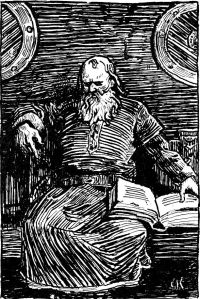
Portrait of Snorri Sturluson Snorri Sturluson Heimskringla — Saga of Hakon Herdebreid

Erling Skakke replied thus to the king's speech: "It is my duty, sire, not to be silent; and I shall give my advice, since it is desired. The resolution now adopted is contrary to my judgment; for I call it foolhardy to fight under these circumstances, although we have so many and such fine men. Supposing we make an attack on them, and row up against this river-current; then one of the three men who are in each half room must be employed in rowing only, and another must be covering with the shield the man who rows; and what have we then to fight with but one third of our men?
Source: Wikisource

Portrait of Snorri Sturluson Snorri Sturluson Heimskringla — Saga of Hakon Herdebreid

Sigurd of Reyr's Speech. Then Sigurd of Reyr made the following speech: "Now there is hope that the time is come which has been promised us all the summer, that we shall meet King Inge in battle. We have long prepared ourselves for this; and many of our comrades have boasted that they would never fly from or submit to King Inge and Gregorius, and now let them remember their words. But we who have sometimes got the toothache in our conflicts with them, speak less confidently; for it has happened, as all have heard, that we very often have come off without glory.
Source: Wikisource

Portrait of Snorri Sturluson Snorri Sturluson Heimskringla — Saga of Hakon Herdebreid

Although we have somewhat fewer men than they, yet luck determines which side shall have the advantage, and God knows that the right is on our side. Inge has killed two of his brothers; and it is obvious to all men that the mulct he intends to pay King Hakon for his father's murder is to murder him also, as well as his other relations, which will be seen this day to be his intent. King Hakon desired from the beginning no more of Norway than the third part, which his father had possessed, and which was denied him
Source: Wikisource

Get perspective with Kwize: daily news enlightened by great literature