Summary

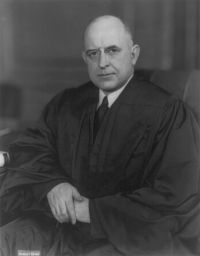
Portrait of Stanley Forman Reed Stanley Forman Reed Canadian Aviator v. United States…

The dismissal by the lower court of petitioner's libel raises three questions for consideration by this Court: Does the Public Vessels Act, 1925, authorize suit against the United States where the public vessel is not the physical cause, the 'physical instrument' by which the damage is done; that is, is the Act confined to cases involving the collision situation? If not, does the Act, which authorizes the filing of a libel in personam against the United States, authorize recovery in such suit on admiralty principles of in rem as well as in personam liability?
Source: Wikisource

Portrait of Stanley Forman Reed Stanley Forman Reed Canadian Aviator v. United States…

Prior to 1916 a private owner whose ship was damaged by negligent operation of a vessel owned or operated by the United States could not recover from the United States for damages suffered due to the United States' immunity from suit. On the other hand, the United States could sue private owners for damages arising from their negligence. Recognizing the inequities of this situation, Congress passed numerous private acts granting relief in a particular case where a private vessel was damaged by negligent operation of a government ship.
Source: Wikisource

Portrait of Stanley Forman Reed Stanley Forman Reed Canadian Aviator v. United States…

The consent to suit embodied in the Act thus extends to cases where the negligence of the personnel of a public vessel in the operation of the vessel causes damage to other ships, their cargoes, and personnel, regardless of physical contact between the two ships, [21] and where principles of admiralty law imposed liability on private parties. There seems no logical reason for allowing recovery for collision and refusing recovery for damages caused by other movements of the offending vessel.
Source: Wikisource

Get perspective with Kwize: daily news enlightened by great literature