Summary

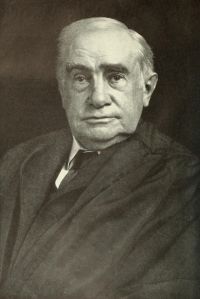
Portrait of Henry Billings Brown Henry Billings Brown The Corsair (145 U.S. 335) — Opinion of the Court

A maritime lien is said by writers upon maritime law to be the foundation of every proceeding in rem in the admiralty. In much the larger class of cases, the lien is given by the general admiralty law, but in other instances, such, for example, as insurance, pilotage, wharfage, and materials furnished in the home port of the vessel, the lien is given, if at all, by the local law.
Source: Wikisource

Portrait of Henry Billings Brown Henry Billings Brown The Corsair (145 U.S. 335) — Opinion of the Court

An important question arises in connection with the dismissal of the original libel, which has never been squarely presented to this court before, and that is as to the power of the district court to entertain a libel in rem for damages incurred by loss of life, where by the local law a right of action survives to the administrator or relatives of the deceased, but no lien is expressly created by the act.
Source: Wikisource

Portrait of Henry Billings Brown Henry Billings Brown The Corsair (145 U.S. 335) — Opinion of the Court

First, the amendment to the original libel, by introducing the owners of the tug as parties defendants, was in violation of Admiralty Rule 15, providing that, 'in all suits for damage by collision, the libelant may proceed against the ship and master, or against the ship alone, or against the master or owner alone in personam.' These rules, from 12 to 20, inclusive, were intended to prescribe a remedy appropriate to each class of cases in admiralty, allowing in certain cases a joinder of ship and freight, or ship and master, or alternative actions against the ship, master, or owner alone.
Source: Wikisource

Get perspective with Kwize: daily news enlightened by great literature