Summary

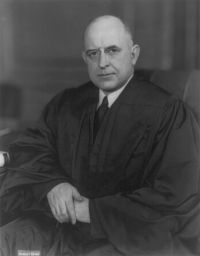
Portrait of Stanley Forman Reed Stanley Forman Reed Fisher v. Pace — Opinion of the Court

This judgment of the Supreme Court turned on their understanding of Texas law and practice. We see nothing in their opinion or conclusion that indicates any disregard of petitioner's rights. The conduct of a judge should be such as to command respect for himself as well as for his office. We cannot say, however, that mildly provocative language from the bench puts a constitutional protection around an attorney so as to allow him to show the contempt for judge and court manifested by this record, particularly the last few sentences of the altercation.
Source: Wikisource

Portrait of Stanley Forman Reed Stanley Forman Reed Fisher v. Pace — Opinion of the Court

In addition to this stub-born effort to bring excluded matter to the knowledge of the jury, the petitioner twice refused to heed the court's admonition not to argue the point. As the Supreme Court said, 'It was the duty and power of the trial judge in the trial of the compensation suit to determine the type, manner and character of the argument before the jury. Of course his rulings thereon were subject to review in the appellate courts, but he has the power to make them whether right or wrong. If they are erroneous the injured party has the plain, simple and adequate remedy of appeal.
Source: Wikisource

Portrait of Stanley Forman Reed Stanley Forman Reed Fisher v. Pace — Opinion of the Court

Counsel are required to confine their arguments to the evidence and must not touch upon matters withdrawn from the consideration of the jury. [7] Yet here, petitioner, a member of the Texas bar, ignored this rule and at the outset of his address to the jury exceeded the bounds of permissible argument by trying to tell the jury the maximum compensation which their answers to the special issues would allow his client.
Source: Wikisource

Get perspective with Kwize: daily news enlightened by great literature