Summary

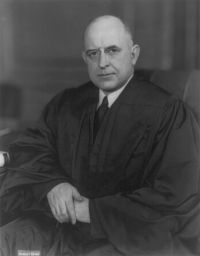
Portrait of Stanley Forman Reed Stanley Forman Reed United States v. Texas (339 U.S. 707…

The needs of defense and foreign affairs alone cannot transfer ownership of an ocean bed from a state to the Federal Government any more than they could transfer iron ore under uplands from state to federal ownership. National responsibility is no greater in respect to the marginal sea than it is toward every other particle of American territory. In my view, Texas owned the marginal area by virtue of its original proprietorship; it has not been shown to my satisfaction that it lost it by the terms of the Resolution of Annexation.
I would deny the United States motion for judgment.
Source: Wikisource

Portrait of Stanley Forman Reed Stanley Forman Reed United States v. Texas (339 U.S. 707…

The argument cannot reasonably be extended to Texas without a holding that Texas ceded that area to the United States.
The necessity for the United States to defend the land and to handle international affairs is not enough to transfer property rights in the marginal sea from Texas to the United States. Federal sovereignty is paramount within national boundaries, but federal ownership depends on taking possession, as the California case holds
Source: Wikisource

Portrait of Stanley Forman Reed Stanley Forman Reed United States v. Texas (339 U.S. 707…

Time has not made the reasoning of United States v. State of California, 332 U.S. 19, 67 S.Ct. 1658, 91 L.Ed. 1889, more persuasive but the issue there decided is no longer open for me. It is relevant, however, to note that in rejecting California's claim of ownership in the off-shore oil the Court carefully abstained from recognizing such claim of ownership by the United States. This was emphasized when the Court struck out the proprietary claim of the United States from the terms of the decree proposed by the United States in the California case.
Source: Wikisource

Get perspective with Kwize: daily news enlightened by great literature