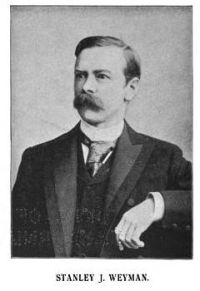
Stanley J. Weyman

Stanley J. Weyman

Summary

Portrait of Stanley J. Weyman Stanley J. Weyman The Cat and the King (1895)

Then I looked at the king, and he at me, with gloomy meaning in our eyes. He was the first to speak. "The cat to whom you gave the milk?" he said.
"Yes, sire," La Trape answered, in a voice that seemed to come from his heart.
"But still, courage!" the king cried. "Courage, man! A dose that would kill a cat may not kill a man. Do you feel ill?"
Source: Wikisource

Portrait of Stanley J. Weyman Stanley J. Weyman The Cat and the King (1895)

The shutters were thrown wide open, and the cold morning light poured into the room with an effect rather sombre than bright, the huge figures on the tapestry looming huger from a drab and melancholy background, and the chamber presenting all those features of disorder that in a sleeping-room lie hid at night, only to show themselves in a more vivid shape in the morning.
The king sent his page out, and bade me sit by him. "I have had a bad night," he said, with a shudder.
Source: Wikisource

Portrait of Stanley J. Weyman Stanley J. Weyman The Cat and the King (1895)

Get up," he continued harshly, yet with a ring of triumph in his voice; "all you have got is the colic, and it is no more than you deserve. Get up, I say, and beg his Majesty's pardon."
"But," the king remonstrated in a tone of anger, "the man is dying."
"He is no more dying than you are, sire," the other answered. "Or, if he is, it is of fright. There, he can stand as well as you or I."
And, to be sure, as he spoke, La Trape scrambled to his feet, and with a mien between shame and doubt stood staring at us, the very picture of a simpleton.
Source: Wikisource

Get perspective with Kwize: daily news enlightened by great literature