Summary

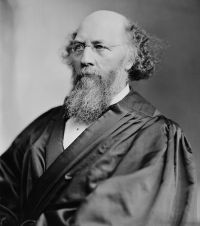
Portrait of Stephen Johnson Field Stephen Johnson Field Allore v. Jewell — Opinion of the Court

Certain it is, that, in negotiating for the disposition of the property, she stood, in her sickness and infirmities, on no terms of equality with the defendant, who, with his attorney and agent, met her alone in her hovel to obtain the conveyance.
It is not necessary, in order to secure the aid of equity, to prove that the deceased was at the time insane, or in such a state of mental imbecility as to render her entirely incapable of executing a valid deed.
Source: Wikisource

Portrait of Stephen Johnson Field Stephen Johnson Field Allore v. Jewell — Opinion of the Court

Chief Justice Marshall, speaking of this, and, it would seem, of other deeds executed by the deceased, said: 'If these deeds were obtained by the exercise of undue influence over a man whose mind had ceased to be the safe guide of his actions, it is against conscience for him who has obtained them to derive any advantage from them. It is the peculiar province of a court of conscience to set them aside. That a court of equity will interpose in such a case is among its best-settled principles.
Source: Wikisource

Portrait of Stephen Johnson Field Stephen Johnson Field Allore v. Jewell — Opinion of the Court

And yet, when all the facts stated by the different witnesses are taken together, one is led irresistibly by their combined effect to the conclusion, that, if the deceased was not afficted with insanity for some years before her death, her mind wandered so near the line which divides sanity from insanity as to render any important business transaction with her of doubtful propristy, and to justify a careful scrutiny into its fairness.
Source: Wikisource

Get perspective with Kwize: daily news enlightened by great literature