Summary

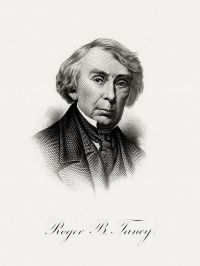
Portrait of Roger B. Taney Roger B. Taney Maxwell v. Kennedy — Opinion of the Court

It is the established rule in a court of equity, that the creditor who claims its aid must show that he has used reasonable diligence to recover his debt, and that the difficulties in his way at law have not been occasioned by his own neglect. A delay of twenty years is considered an absolute bar in a court of equity, unless it is satisfactorily accounted for.
Source: Wikisource

Portrait of Roger B. Taney Roger B. Taney Maxwell v. Kennedy — Opinion of the Court

And whatever might have been the wasteful and dissolute habits of the debtor, he yet at that time owned the land which at this late period the complainant is seeking to charge with this debt; and continued to hold it until the conveyance to his brother in 1824. And if the creditor chose to rest satisfied with information as to his habits and manner of living, instead of using proper exertions to find out his situation as to property, his want of knowledge in this respect was the fruit of his own laches.
Source: Wikisource

Portrait of Roger B. Taney Roger B. Taney Maxwell v. Kennedy — Opinion of the Court

He would obtain relief, because he neglected to sue at law when the debtor appears to have been in a condition to pay the debt; and when that fact could have been ascertained by reasonable exertions on his part. In the eye of a court of equity, laches upon a judgment of South Carolina cannot be entitled to more favor than laches upon a judgment in Alabama, and both must be visited with the same consequences. Relief in a court of equity, under the circumstances stated in the bill and exhibits, would be an encouragement to revive stale demands, which had been abandoned for years.
Source: Wikisource

Get perspective with Kwize: daily news enlightened by great literature