Summary

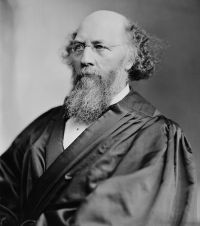
Portrait of Stephen Johnson Field Stephen Johnson Field Glasgow v. Lipse — Opinion of the Court

It is undoubtedly true that an executor is chargeable with the utmost good faith in dealing with the estate intrusted to him. He cannot wantonly neglect the property, or squander it by useless expenditures, or suffer it to go to waste, without incurring personal liability for the consequent depreciation. Nor can he call in good investments when the money is not needed, nor accept the payment of debts for less than their face when the full amount can be recovered without unnecessary delay and expense
Source: Wikisource

Portrait of Stephen Johnson Field Stephen Johnson Field Glasgow v. Lipse — Opinion of the Court

We may even concede the doctrine declared by the court of appeals of Virginia, that a debtor who pays to an executor in depreciated currency a debt payable in gold or its equivalent, knowing at the time that the currency is not needed for the payment of debts or legacies, or other uses of the estate, and that the safety of the debt does not require its collection, may be also charged as a participant in the devastavit.
Source: Wikisource

Portrait of Stephen Johnson Field Stephen Johnson Field Glasgow v. Lipse — Opinion of the Court

So, if we treat the check as intended to draw such notes, there is no ground on which the validity of the payment can be assailed, so far as the estate of Spears is concerned.
It is not necessary for us to determine whether or not the act of Virginia allowing a resident fiduciary, authorized to execute a power or do an act jointly with one or more fiduciaries residing out of the Confederacy, to exercise such power or do such act without the concurrence of the non-resident fiduciary, was a valid exercise of the legislative power, so as to justify the resident executor in executing the deed.
Source: Wikisource

Get perspective with Kwize: daily news enlightened by great literature