Summary

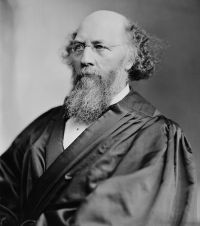
Portrait of Stephen Johnson Field Stephen Johnson Field Board of Liquidation of the City of New Orleans v…

The constitution of 1879 contemplates that provision shall be made for the payment of the entire debt. It declares that the general assembly, at its next session, 'shall enact such legislation as may be proper to liquidate the indebtedness of the city of New Orleans, and to apply its assets to the satisfaction thereof;' and this means, obviously, the entire indebtedness, in whatever form it exists, whether bonded or floating, and not merely a part of it
Source: Wikisource

Portrait of Stephen Johnson Field Stephen Johnson Field Board of Liquidation of the City of New Orleans v…

The relator, with his judgment against the city, has a right to stand, with reference to those proceeds, on an equal footing with her other creditors, notwithstanding that by the terms of the act of 1882 he is excluded from all participation in them; and, to enable him to do so, he can demand the bonds of the city for the balance due him, pursuant to the compromise with the municipality. With the bonds he will not have any preference over other bondholders, but will be entitled to share ratably with them in the proceeds of the property appropriated for the payment of their bonds.
Source: Wikisource

Portrait of Stephen Johnson Field Stephen Johnson Field Board of Liquidation of the City of New Orleans v…

Whenever corporations, private or municipal, are permitted by the legislature to contract debts, they are brought equally with natural persons under the dominion of this law, and are alike bound by it. The Code also declares that 'the property of the debtor is the common pledge of his creditors, and the proceeds of its sale must be distributed among them ratably, unless there exist among the creditors some lawful causes of preference.' Article 3150.
Source: Wikisource

Get perspective with Kwize: daily news enlightened by great literature