Summary

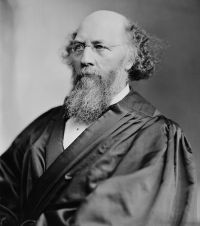
Portrait of Stephen Johnson Field Stephen Johnson Field United States v. New Orleans — Opinion of the Court

Indeed, it is always to be assumed, in the absence of clear restrictive provisions, that when the legislature grants to a city the power to create a debt, it intends that the city shall pay it, and that the payment shall not be left to its caprice or pleasure. When, therefore, a power to contract a debt is conferred, it must be held that a corresponding power of providing for its payment is also conferred.
Source: Wikisource

Portrait of Stephen Johnson Field Stephen Johnson Field United States v. New Orleans — Opinion of the Court

The position that the power of taxation belongs exclusively to the legislative branch of the government, no one will controvert. Under our system it is lodged nowhere else. But it is a power that may be delegated by the legislature to municipal corporations, which are merely instrumentalities of the State for the better administration of the government in matters of local concern. When such a corporation is created, the power of taxation is vested in it as an essential attribute, for all the purposes of its existence, unless its exercise be in express terms prohibited.
Source: Wikisource

Portrait of Stephen Johnson Field Stephen Johnson Field United States v. New Orleans — Opinion of the Court

For the accomplishment of those purposes, its authorities, however limited the corporation, must have the power to raise money and control its expenditure. In a city, even of small extent, they have to provide for the preservation of peace, good order, and health, and the execution of such measures as conduce to the general good of its citizens; such as the opening and repairing of streets, the construction of sidewalks, sewers, and drains, the introduction of water, and the establishment of a fire and police department.
Source: Wikisource

Get perspective with Kwize: daily news enlightened by great literature