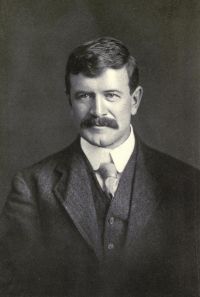
Stephen Leacock

Stephen Leacock

Summary

Portrait of Stephen Leacock Stephen Leacock Homer and Humbug (1908)

Be this as it may, I for my part bitterly regret the lies I have told about my appreciation of Latin and Greek literature. I am anxious to do what I can to set things right. I am therefore engaged on, indeed have nearly completed, a work which will enable all readers to judge the matter for themselves. What I have done is a translation of all the great classics, not in the usual literal way but on a design that brings them into harmony with modern life.
Source: Wikisource

Portrait of Stephen Leacock Stephen Leacock Homer and Humbug (1908)

I have seen a deceived dog thus value a pup with a broken leg, and a pauper child nurse a dead doll with the sawdust out of it. So I nursed my dead Homer and my broken Demosthenes though I knew that there was more sawdust in the stomach of one modern author than in the whole lot of them. Observe, I do not say which it is that has it full of it.
So, I say, I began to lie about the classics. I said to people who knew no Greek that there was a sublimity, a majesty about Homer which they could never hope to grasp.
Source: Wikisource

Portrait of Stephen Leacock Stephen Leacock Homer and Humbug (1908)

I know there are solid arguments advanced in favor of the classics. I often hear them from my colleagues. My friend the Professor of Greek tells me that he truly believes the classics have made him what he is. This is a very grave statement, if well founded. Indeed, I have heard the same argument from a great many Latin and Greek scholars. They all claim, with some heat, that Latin and Greek have practically made them what they are. This damaging charge against the classics should not be too readily accepted. In my opinion some of these men would be what they are, no matter what they were.
Source: Wikisource

Get perspective with Kwize: daily news enlightened by great literature