Summary

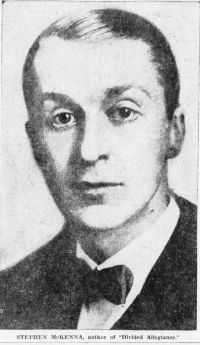
Portrait of Stephen McKenna Stephen McKenna The Confessions of a Well-Meaning Woman… (1922)

Forgive me if I spoke sharply; but one’s nerves are not of iron, and it is not pleasant to be charged with conspiracy by the members of one’s own family. Oh, not Spenworth! We have hardly met for years, I am thankful to say, though my husband has more than once tried to bring about a reconciliation. I have no personal animus; but, if the head of an honoured family chooses to drag his name in the mire, he shall at least not say that he has had countenance or support from even so humble a person as his sister-in-law.
Source: Wikisource

Portrait of Stephen McKenna Stephen McKenna The Confessions of a Well-Meaning Woman… (1922)

I have told you that people were beginning to smile, and that should have been humiliating enough to a woman who has achieved at least a dignity of position; one said that there was nothing in it, but that had no effect. Anything connected with divorce seems to breed a morbid curiosity; they were being spied on, whispered about; people who did not wait to consider that Kathleen was nearly forty assumed that she would inevitably marry again and decided no less obstinately that she would marry Laughton.
Source: Wikisource

Portrait of Stephen McKenna Stephen McKenna The Confessions of a Well-Meaning Woman… (1922)

It is more a question of character than of income. And Arthur had his share of good looks, as you can see from Will. No! Whatever Spenworth did, he could always buy indulgence. Establish for yourself the reputation of “a good fellow”— whatever that may mean—; and you will walk on roses all your life. . .
One must assume that he thought the marriage would be a success, but I am sure no one else did. I knew Spenworth, you see. It is ancient history now, but it was only when I destroyed his last hope by marrying Arthur that he turned in desperation to Kathleen Manorby .
Source: Wikisource

Get perspective with Kwize: daily news enlightened by great literature