Summary

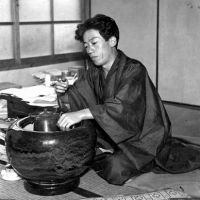
Portrait of Takiji Kobayashi Takiji Kobayashi The Cannery Boat — For the Sake of the Citizens (1933)

And now to-day, this day of days, the street-car strike had been settled. He felt as if a ton of bricks had been lifted off his back. “No one can say I didn’t do my bit any more.” The faces of all the citizens who had mumbled words of thanks to him and his mates floated vividly through his mind—the city’s hero.
At every street corner the busy jingle of the newsboys’ bells brought the network of moving feet to a standstill. Every evening paper was full of the strike. Arisuke almost wept for sheer joy.
“Come on, let’s have another. A man’s got to do something.”
Source: Wikisource

Portrait of Takiji Kobayashi Takiji Kobayashi The Cannery Boat — For the Sake of the Citizens (1933)

The chief of the City Electric Bureau even wept tears before those crawling worms of the Young Men’s Association. His unexpected behaviour amazed, excited and stirred Arisuke and his mates to the depths of their souls. They pledged themselves to work for the 4,000,000 citizens regardless of consequences. With a little exaggeration you might say that for such inexperienced men it meant risking their lives. Arisuke himself, at Miyakezaka, made a mistake in putting on the brakes, and damaged the back of the car ahead.
Source: Wikisource

Portrait of Takiji Kobayashi Takiji Kobayashi The Cannery Boat — For the Sake of the Citizens (1933)

When a car drew up in front of Shinjuku Station, a crowd like an army of ants would surround it in no time. Office workers, who had to be at their offices by ten minutes to nine, kept pulling out their watches and scowling in exasperation as they mingled with the crowds: “This is outrageous. They’re free to strike, but I wish they’d do it so as not to inconvenience others.”
Source: Wikisource

Get perspective with Kwize: daily news enlightened by great literature