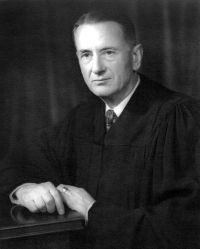
Charles Evans Whittaker

Charles Evans Whittaker

Summary

Portrait of Charles Evans Whittaker Charles Evans Whittaker United States v. Kaiser — Dissent

The motivation of a public welfare agency in supplying basic needs to the unemployed is purely charitable in nature, but payments by a private union to striking workers to enable them to continue to successful conclusion a strike called or approved by the union, cannot reasonably be said to have proceeded primarily from any such charitable impulse.
Source: Wikisource

Portrait of Charles Evans Whittaker Charles Evans Whittaker United States v. Kaiser — Dissent

The union made payments only to strikers to sustain then while they carried on the strike, whereas, a welfare agency assists the needy solely from humanitarian impulses, without purpose to obtain any benefit for itself, and whether the needy recipients are strikers or not. Public welfare payments represent the charitable response of the community to relieve hardships arising from conditions beyond its control; but the strike benefits shown by this record were designed, principally at least, for the purpose of sustaining the strikers while they carried on the union's strike to victorious end.
Source: Wikisource

Portrait of Charles Evans Whittaker Charles Evans Whittaker United States v. Kaiser — Dissent

They are paid only upon the event of a strike which is a means employed by the union and its members for securing economic benefits, and, for this reason, they do not constitute amounts gratuitously paid or received.
'Accordingly, the strike benefit payments received under these circumstances do not constitute gifts but constitute income and are includible in the gross income of the recipients even though distributed on the basis of their need and regardless of whether the recipients are members or nonmembers of the union.' Rev.Rul.
Source: Wikisource

Get perspective with Kwize: daily news enlightened by great literature