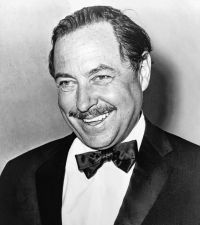
Tennessee Williams

Tennessee Williams

Summary

Portrait of Tennessee Williams Tennessee Williams The Vengeance of Nitocris (1928)

He had barred the temple doors and with his own breath had blown out the sacred candles. He had defiled the hallowed altars with the carcasses of beasts. Even, it was said in low, shocked whispers, in a mock ceremony of worship he had burned the carrion of a hyena, most abhorrent of all beasts to Osiris, upon the holy altar of gold, which even the most high of priests forbore to lay naked hands upon!
Surely, even though he be pharaoh, ruler of all Egypt and holder of the golden eagle, he could not be permitted to commit such violent sacrileges without punishment from man.
Source: Wikisource

Portrait of Tennessee Williams Tennessee Williams The Vengeance of Nitocris (1928)

The figure of the pharaoh stood inflexible as rock. Superbly tall and muscular, his bare arms and limbs glittering like burnished copper in the light of the brilliant sun, his body erect and tense in his attitude of defiance, he looked indeed a mortal fit almost to challenge gods.
The mob, led by the black-robed priests and nobles who had arrived at the foot of the steps, now fell back before the stunning, magnificent defiance of their giant ruler. They felt like demons who had assailed the heavens and had been abashed and shamed by the mere sight of that which they had assailed.
Source: Wikisource

Portrait of Tennessee Williams Tennessee Williams The Vengeance of Nitocris (1928)

Mob justice was to be done.
Within the resplendent portals of the palace the pharaoh, ruler of all Egypt, watched with tightened brow the orderly but menacing ap-proach of the mob. He divined their intent. But was he not their pharaoh? He could contend with gods, so why should he fear mere dogs of men?
A woman clung to his stiffened arm. She was tall and as majestically handsome as he. A garb of linen, as brilliantly golden as the sun, entwined her body closely, closely, and bands of jet were around her throat and forehead. She was the fair and well-loved Nitocris
Source: Wikisource

Get perspective with Kwize: daily news enlightened by great literature