Summary

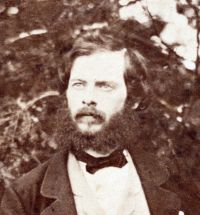
Portrait of Theodore Winthrop Theodore Winthrop Cecil Dreeme — Chapter XIV. A Mild Orgie (1864)

Honor seemed wisdom; truth the only strength; generosity its own reward; chivalry the expression in manners of a loyal heart. All the brave joyousness of my nature responded to this laugh of Dreeme’s, and spoke out boldly in my echoing one. Each of us perceived new sympathy in the other.
Locksley now made his reappearance with the volcano. The oysters crackled in the stove, fizzed and bubbled over the lamp on the table.
The poetic temperament takes in happiness and good cheer as a bud takes sunshine. Dreeme expanded more and more. His silver laugh flowed free in chastened merriment.
Source: Wikisource

Portrait of Theodore Winthrop Theodore Winthrop Cecil Dreeme — Chapter XIV. A Mild Orgie (1864)

Here the Shrewsbury in the stove recalled us to mundane phenomena, by giving a loud wheeze.
“There she blows!” cried Locksley.
He grappled the crustaceous grandee with the tongs, and popped him on a plate. A little fragrant steam issued from the calcined lips, invitingly parted.
“Roast oysters,” says Locksley, “always wheezes when they’re done to a bulge. If you want ’em done dry, wait till the music’s all cooked out of ’em. This is a bulger,” he continued, deftly whisking off the top shell. “Down it, Mr. Dreeme, without winking!”
Source: Wikisource

Portrait of Theodore Winthrop Theodore Winthrop Cecil Dreeme — Chapter XIV. A Mild Orgie (1864)

Dreeme obeyed.
Locksley consigned another of the noble race of Shrewsbury to fiery martyrdom. Then he turned again to the painter.
“You won’t go and die again?” said he.
Dreeme smiled, and shook his head.
“Not,” says the janitor, with queer earnestness of manner, “that I wouldn’t come in any time on call and help liven you up, howsever dead you might be. But it ain’t good for you; it’s unwholesome, — tell him so, Mr. Byng.”
“Be informed, then, Mr. Dreeme,” said I, “that dying is not good for you.
Source: Wikisource

Get perspective with Kwize: daily news enlightened by great literature