Summary

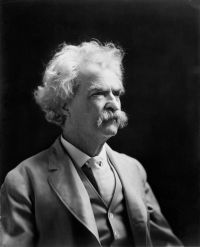
Portrait of Mark Twain Mark Twain,  The Innocents Abroad — Chapter XXXIX. (1869)

“ Yet when one comes to reflect upon the nature of an oyster, it seems plain that he does not care for scenery. An oyster has no taste for such things; he cares nothing for the beautiful. An oyster is of a retiring disposition, and not lively—not even cheerful above the average, and never enterprising. But above all, an oyster does not take any interest in scenery—he scorns it. What have I arrived at now? Simply at the point I started from, namely, those oyster shells are there, in regular layers, five hundred feet above the sea, and no man knows how they got there. ”
Source: Wikisource

Portrait of Mark Twain Mark Twain,  The Innocents Abroad — Chapter XXXIX. (1869)

“ The hills and the rocks are rent asunder in places, excavations expose great blocks of building-stone that have lain buried for ages, and all the mean houses and walls of modern Smyrna along the way are spotted white with broken pillars, capitals and fragments of sculptured marble that once adorned the lordly palaces that were the glory of the city in the olden time. ”
Source: Wikisource

Portrait of Mark Twain Mark Twain,  The Innocents Abroad — Chapter XXXIX. (1869)

“ Now how did those masses of oyster-shells get there? I can not determine. Broken crockery and oyster-shells are suggestive of restaurants—but then they could have had no such places away up there on that mountain side in our time, because nobody has lived up there. A restaurant would not pay in such a stony, forbidding, desolate place. And besides, there were no champagne corks among the shells. If there ever was a restaurant there, it must have been in Smyrna’s palmy days, when the hills were covered with palaces. I could believe in one restaurant, on those terms ”
Source: Wikisource

Get perspective with Kwize: daily news enlightened by great literature