Summary

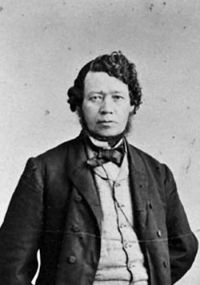
Portrait of Thomas D'Arcy McGee Thomas D'Arcy McGee A Popular History of Ireland : from the Earliest Period to the Emancipation of the Catholics -…

The personal reputation of the younger Emmet, the least known to his countrymen of all the United Irish leaders, except by the crowning act of his death, is safe beyond the reach of calumny, or party zeal, or time's changes. It is embalmed in the verse of Moore and Southey, and the precious prose of Washington Irvine. Men of genius in England and America have done honour to his memory; in the annals of his own country his name deserves to stand with those youthful chiefs, equally renowned, and equally ready to seal their patriotism with their blood—Sir Cahir O'Doherty and Hugh Roe O'Donnell.
Source: Gutenberg

Portrait of Thomas D'Arcy McGee Thomas D'Arcy McGee A Popular History of Ireland : from the Earliest Period to the Emancipation of the Catholics -…

It was a strange anomaly, and one which continued for some years longer, that the statesmen of the Catholic body should be all Protestants. A more generous or tolerant spirit than Grattan's never existed; a clearer or more fearless intellect than Plunkett's was not to be found; nobler and more disinterested friends than Ponsonby, Curran, Burroughs and Wallace, no people ever had; but still they were friends from without; men of another religion, or of no particular religion, advising and guiding an eminently religious people in their struggle for religious liberty.
Source: Gutenberg

Portrait of Thomas D'Arcy McGee Thomas D'Arcy McGee A Popular History of Ireland : from the Earliest Period to the Emancipation of the Catholics -…

During the last years of this reign, Swift was the most powerful and popular person in Ireland, and perhaps in the empire. The freedom with which he advised Carteret the Viceroy, and remonstrated with Walpole, the Premier, on the misrule of his country, was worthy of the ascendancy of his genius. No man of letters, no churchman, no statesman of any country in any age, ever showed himself more thoroughly independent, in his intercourse with men of office, than Swift. The vice of Ireland was exactly the other way, so that in this respect also, the patriot was the liberator.
Source: Gutenberg

Get perspective with Kwize: daily news enlightened by great literature