Summary

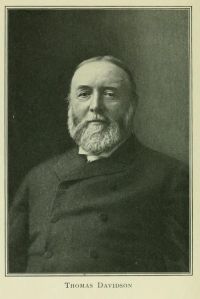
Portrait of Thomas Davidson Thomas Davidson Chambers's Twentieth Century Dictionary 1908… (1908)

Ovoviviparous, ō-vō-vi-vip′ar-us, adj. producing eggs which are hatched in the body of the parent. [L. ovum, an egg, vivus, living, parĕre, to bring forth.]
Ovule, ōv′ūl, n. a little egg: the seed of a plant in its rudimentary state, growing from the placenta.—adj. Ov′ular.—ns. Ovulā′tion, the formation of ova, or the period when this takes place; Ov′ulite, a fossil egg. [Dim. of L. ovum, an egg.]
Ovum, ō′vum, n. an egg: (biol.) the egg-cell, in all organisms the starting-point of the embryo, development beginning as soon as it is supplemented by the male-cell or spermatozoon:—pl.
Source: Wikisource

Portrait of Thomas Davidson Thomas Davidson Chambers's Twentieth Century Dictionary 1908… (1908)

Oxychlō′ride, a chemical compound containing both chlorine and oxygen in combination with some other element.—v.t. Ox′ygenāte, to unite, or cause to unite, with oxygen.—n. Oxygenā′tion, act of oxygenating.—v.t. Ox′ygenise (same as Oxygenate) .—adj. Oxyg′enous, pertaining to, or obtained from, oxygen.—adj. Oxyhy′drogen, pertaining to a mixture of oxygen and hydrogen, as in a form of blowpipe in which jets of either ignite as they issue from separate reservoirs. [Gr. oxys, sharp, gen, the root of gennaein, to generate.]
Source: Wikisource

Get perspective with Kwize: daily news enlightened by great literature