Summary

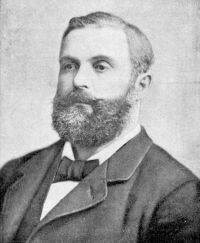
Portrait of Thomas W. Knox Thomas W. Knox Decisive Battles Since Waterloo… (1902)

It was thus demonstrated that turret ships were capable of making long sea voyages; since that time many sea-going iron-clads have been constructed by most of the European nations, and their success is fully established.
Probably no naval conflict in the history of the world ever attracted as much attention as did the battle in Hampton Roads, between the Monitor and the Merrimac. It revolutionized the navies of the world, and showed that the wooden ships, which had long held control of the ocean, were of no further use for fighting purposes.
Source: Wikisource

Portrait of Thomas W. Knox Thomas W. Knox Decisive Battles Since Waterloo… (1902)

La Gloire was the precursor of the iron-clad fleet of France, and virtually of the iron-clad fleets of all nations of the globe. Shortly after she was begun the French laid the keels of the Normandie and the Invincible on the same plans. England could not afford to lie idle under these circumstances; her naval authorities ordered the building of the Warrior and shortly afterwards of the Black Prince, Defence, and Queen.
Source: Wikisource

Portrait of Thomas W. Knox Thomas W. Knox Decisive Battles Since Waterloo… (1902)

The English government made several experiments with armor plating, but the conclusions were unfavorable to its adoption. To France belongs the credit of the first iron-plated steam frigate of the first class. In the Crimean war she constructed and used four small gun-boats with armor plating; in March, 1858, work was begun on La Gloire, a sea-going frigate carrying thirty-six guns, and protected amidships with plates of iron four and a half inches thick, with a backing of two feet of solid timber.
Source: Wikisource

Get perspective with Kwize: daily news enlightened by great literature