Summary

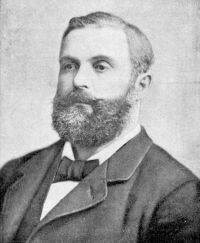
Portrait of Thomas W. Knox Thomas W. Knox Decisive Battles Since Waterloo… (1902)

In the fourth dynasty of the ancient empire the pyramids were built by the unpaid labor of the people, and in the same way the great canal connecting Alexandria with the Nile was made by Mohammed Ali Pasha, the founder of the dynasty which now occupies the khedivial throne. The splendors of the ancient rulers have been imitated by those of modern times, and the result is that the country is oppressively burdened with taxation and hopelessly involved in debt.
Source: Wikisource

Portrait of Thomas W. Knox Thomas W. Knox Decisive Battles Since Waterloo… (1902)

Arabi Pasha was the leader of the national party, which protested against the control of Egypt by foreigners, the exemption of foreigners living in Egypt from taxation, the diversion of the revenues of the country to the foreign creditors of Egypt while the officers of the army and other public servants remained unpaid, the employment of foreigners in public places when the same work could be done by Egyptians at one fifth the cost, and the general tyranny and oppression of the Turkish rulers of the country.
Source: Wikisource

Portrait of Thomas W. Knox Thomas W. Knox Decisive Battles Since Waterloo… (1902)

On the return of this commission, it was decided to send a military force of about 200 men to bring the Mahdi to Khartoum. The expedition started early in 1882, and reached the residence of the Mahdi, where it was attacked and defeated by his followers, 120 men and 2 officers being killed or captured. Another expedition met the same fate, being driven back with loss, and in June, 1882, Yussuf Pasha's army of the Soudan of 6,000 men was practically destroyed, all the soldiers, save a few hundreds, being killed or captured.
Source: Wikisource

Get perspective with Kwize: daily news enlightened by great literature