Summary

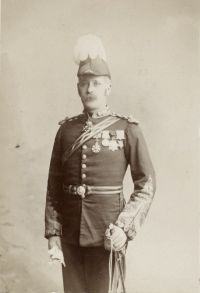
Portrait of Charles Moore Watson Charles Moore Watson 1911 Encyclopædia Britannica, Volume 12… (1911)

In fact, except personal courage, great fertility in military resource, a lively though sometimes ill-directed repugnance to injustice, oppression and meanness of every description, and a considerable power of acquiring influence over those, necessarily limited in numbers, with whom he was brought into personal contact, General Gordon does not appear to have possessed any of the qualities which would have fitted him to undertake the difficult task he had in hand.
Source: Wikisource

Portrait of Charles Moore Watson Charles Moore Watson 1911 Encyclopædia Britannica, Volume 12… (1911)

The Egyptian government was too busily engaged in suppressing Arabi’s revolt to be able to send any help to Abdel Kader, and in September 1882, when the British troops entered Cairo, the position in the Sudan was very perilous. Had the British government listened to the representations then made to them, that, having conquered Egypt, it was imperative at once to suppress the revolt in the Sudan, the rebellion could have been crushed, but unfortunately Great Britain would do nothing herself, while the steps she allowed Egypt to take ended in the disaster to Hicks Pasha’s expedition.
Source: Wikisource

Portrait of Charles Moore Watson Charles Moore Watson 1911 Encyclopædia Britannica, Volume 12… (1911)

When it is remembered that Gordon was of a different nationality and religion to the garrison and population, that he had only one British officer to assist him, and that the town was badly fortified and insufficiently provided with food, it is just to say that the defence of Khartum is one of the most remarkable episodes in military history. The siege commenced on the 18th of March, but it was not until August that the British government under the pressure of public opinion decided to take steps to relieve Gordon.
Source: Wikisource

Get perspective with Kwize: daily news enlightened by great literature