Summary

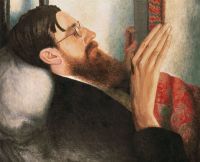
Portrait of Lytton Strachey Lytton Strachey Eminent Victorians — The End of General Gordon (1918)

There emerges from those obscure, unhappy records an interest, not merely political and historical, but human and dramatic. One catches a vision of strange characters, moved by mysterious impulses, interacting in queer complication, and hurrying at last—so it almost seems—like creatures in a puppet show to a predestined catastrophe. The characters, too, have a charm of their own: they are curiously English. What other nation on the face of the earth could have produced Mr. Gladstone and Sir Evelyn Baring and Lord Hartington and General Gordon?
Source: Wikisource

Portrait of Lytton Strachey Lytton Strachey Eminent Victorians — The End of General Gordon (1918)

The news spread like wild-fire through the country: the Madhi had arisen, the Egyptians were destroyed. But it was clear to the little band of enthusiasts at Abba Island that their position on the river was no longer tenable. The Mahdi, deciding upon a second Hegira, retreated south-westward, into the depths of Kordofan.
The retreat was a triumphal progress. The country, groaning under alien misgovernment and vibrating with religious excitement, suddenly found in this rebellious prophet a rallying point, a hero, a deliverer. And now another element was added to the forces of insurrection.
Source: Wikisource

Portrait of Lytton Strachey Lytton Strachey Eminent Victorians — The End of General Gordon (1918)

On one side of him was a veering and vacillating Government; on the other, a frenzied enthusiast. It was his business to interpret to the first the wishes, or rather the inspirations, of the second, and to convey to the second the decisions, or rather the indecisions, of the first. A weaker man would have floated helplessly on the ebb and flow of the Cabinet's wavering policies; a rasher man would have plunged headlong into Gordon's schemes.
Source: Wikisource

Get perspective with Kwize: daily news enlightened by great literature