Summary

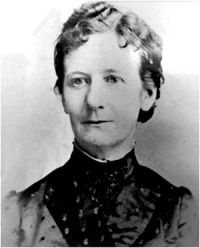
Portrait of Thérèse de Dillmont Thérèse de Dillmont Encyclopedia of Needlework — Plain sewing

What is the use of describing all the old well-known stitches, when machines have so nearly superseded the slower process of hand-sewing? To this our reply is that, of all kinds of needlework, Plain Sewing needs to be most thoroughly learned, as being the foundation of all. Those who are able to employ others to work for them, should at least know how to distinguish good work from bad, and those who are in less fortunate circumstances, have to be taught how to work for themselves.
Source: Wikisource

Portrait of Thérèse de Dillmont Thérèse de Dillmont Encyclopedia of Needlework — Plain sewing

To ensure the hem being straight, a thread may be drawn to mark the line for the second turning, but it is not a good plan, especially in shirt-making, as the edge of the stuff, too apt in any case, to cut and fray, is, thereby, still further weakened. Hems in woollen materials, which will not take a bend, can only be laid and tacked, bit by bit. In making, what are called rolled hems, the needle must be slipped in, so as only to pierce the first turning, in order that the stitches may not be visible on the outside.
Source: Wikisource

Portrait of Thérèse de Dillmont Thérèse de Dillmont Encyclopedia of Needlework — Plain sewing

Only one stitch can be made at a time, and the needle must be put in, exactly at the point where it was drawn out to form the preceding back-stitch, and brought out as many threads further on as were covered by the last back-stitch. The beauty of stitching depends on the uniform length of the stitches, and the straightness of the line formed, to ensure which it is necessary to count the threads for each stitch, and to draw a thread to mark the line.
Source: Wikisource

Get perspective with Kwize: daily news enlightened by great literature