Summary

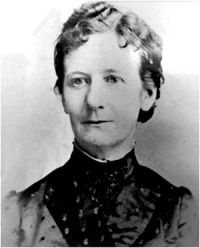
Portrait of Thérèse de Dillmont Thérèse de Dillmont Encyclopedia of Needlework — Preface

The absolute want of any comprehensive book on needlework--such an one as contains both verbal and pictorial descriptions of everything included under the name of needlework--has led me to put into the serviceable form of an Encyclopedia, all the knowledge and experience, which years of unceasing study and practice have enabled me to accumulate on the subject, with the hope that diligent female workers of all ages, may be able, by its means to instruct themselves in every branch of plain and fancy needlework.
Source: Wikisource

Portrait of Thérèse de Dillmont Thérèse de Dillmont Encyclopedia of Needlework — Preface

How best to disguise and repair the wear and tear of use or accident is quite as valuable an art, as that of making new things.
Under the head of mending, we include the strengthening and replacing of the worn and broken threads of a fabric, and fitting in of new stuff in the place of that which is torn or damaged. The former is called darning, the latter, patching.
DARNING.--When only a few of the warp or woof threads are torn or missing, a darn will repair the mischief, provided the surrounding parts be sound. When the damage is more extensive, the piece must be cut out.
Source: Wikisource

Portrait of Thérèse de Dillmont Thérèse de Dillmont Encyclopedia of Needlework — Preface

Use as fine a needle as possible and thread it with hair, instead of silk, or any other kind of fibre. Red and white hair is the strongest, and stronger than the ravellings of the stuff. Of course the hair has first to be carefully cleansed from grease. Pare the edges of the rent, on the right sides, quite clean and even, with a razor, so that both rent and stitches may be lost in the hairy surface of the cloth. Scissors do not cut so closely, and are liable moreover, to disturb the nap, and render the darn more visible.
Source: Wikisource

Get perspective with Kwize: daily news enlightened by great literature