Summary

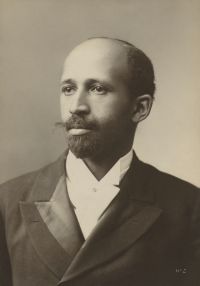
Portrait of W.E.B. DuBois W.E.B. DuBois A Negro Schoolmaster in the New South

Josie told me of it; she was a thin, homely girl of twenty, with a dark brown face and thick, hard hair. I had crossed the stream at Watertown, and rested under the great willows; then I had gone to the little cabin in the lot where Josie was resting on her way to town. The gaunt farmer made me welcome, and Josie, hearing my errand, told me anxiously that they wanted a school over the hill; that but once since the war had a teacher been there; that she herself longed to learn,–and thus she ran on, talking fast and loud, with much earnestness and energy.
Source: Wikisource

Portrait of W.E.B. DuBois W.E.B. DuBois A Negro Schoolmaster in the New South

There are babies a plenty, and one half-witted girl. Across the valley is a house I did not know before, and there I found, rocking one baby and expecting another, one of my schoolgirls, a daughter of Uncle Bird Dowell. She looked somewhat worried with her new duties, but soon bristled into pride over her neat cabin, and the tale of her thrifty husband, the horse and cow, and the farm they were planning to buy.
Source: Wikisource

Portrait of W.E.B. DuBois W.E.B. DuBois A Negro Schoolmaster in the New South

The story reminded me again of the Burkes, and an impatience seized me to know who won in the battle, Doc or the seventy-five acres. For it is a hard thing to make a farm out of nothing, even in fifteen years. So I hurried on, thinking of the Burkes. They used to have a certain magnificent barbarism about them that I liked. They were never vulgar, never immoral, but rather rough and primitive, with an unconventionality that spent itself in loud guffaws, slaps on the back, and naps in the corner. I hurried by the cottage of the misborn Neill boys.
Source: Wikisource

Get perspective with Kwize: daily news enlightened by great literature