Summary

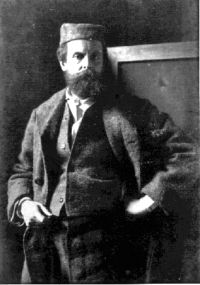
Portrait of Wilfrid Scawen Blunt Wilfrid Scawen Blunt Griselda: a society novel in rhymed verse

The world of other days, the Pagan Rome,
The scarce less Pagan Rome of Christendom.
On these the Prince spoke warmly much and well,
Holding Griselda's patient ears in spell,
Yet broke off smiling when he met her eye
Fixed on his face in its mute sympathy:
A smile which was a question, an appeal,
And seemed to ask the meaning of her zeal.
He did not understand her quite. He saw
Something beyond, unfixed by any law
Of woman's nature his experience knew:
He knew not what to hold or hope as true.
For she was young and sad and beautiful,
41 A very woman with a woman's soul.
Source: Gutenberg

Portrait of Wilfrid Scawen Blunt Wilfrid Scawen Blunt Griselda: a society novel in rhymed verse

Griselda listened. In her heart there stirred
A strange unconscious pleasure at each word,
Which made the sunshine brighter and the sky
More blue, more tender in its sympathy.
The hills of the Campagna crowned with snow
Moved her and touched, she knew not why nor how.
The solemn beauty of the world; the fate
Of all things living, vast and inchoate
Yet clothed with flowers; the soul's eternal dream
Of something still beyond; the passionate whim
Of every noble mind for something good,
Which should assuage its hunger with new food
Source: Gutenberg

Portrait of Wilfrid Scawen Blunt Wilfrid Scawen Blunt Griselda: a society novel in rhymed verse

And when some weep their undeserved disgrace,
Plucks at their cheeks and smites them in the face.
Thou hast no reverence, no respect for right.
Virtue to thee is a lewd appetite,
Remorse a pastime, modesty a lure,
And love, the malady, love's only cure.
Griselda, in her love at thirty-three,
Was the supreme fool of felicity.
Reason and she had taken separate roads,
A spectacle of mirth for men and gods.
And the world laughed—discreetly in its sleeves—
At her poor artless shifts and make-believes.
Source: Gutenberg

Get perspective with Kwize: daily news enlightened by great literature