Summary

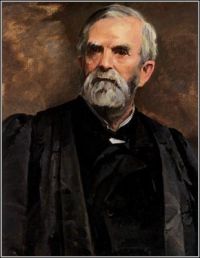
Portrait of William Burnham Woods William Burnham Woods King v. Worthington — Opinion of the Court

It was also held, in the same case, that, where there was a conflict between the act of Congress and the law of the State in regard to the competency of witnesses, the United States court was bound to follow the act of Congress. The question is, therefore, reduced to this: Does the fact, that while the case was pending in the State court these witnesses were held by that court to be incompetent under the State law, preclude them from testifying in the case after its removal to the United States court? We think this question must be answered in the negative.
Source: Wikisource

Portrait of William Burnham Woods William Burnham Woods King v. Worthington — Opinion of the Court

The appellee asserts that the decision of the Supreme Court of Illinois, reversing the decree of the Superior Court, having been made on October 11, while the October Term of the Superior Court was current, the cause might have been redocketed and tried during that term of the Superior Court, and that the re-docketing of the cause at the following November Term, and the filing of the petition for its removal during that term, came too late.
Source: Wikisource

Portrait of William Burnham Woods William Burnham Woods King v. Worthington — Opinion of the Court

This decision was based on a construction of the statute of Illinois, which declares: 'No person shall be disqualified as a witness in any civil action, suit, or proceeding, except as hereinafter stated, by reason of his or her interest is as follows: thereof, as a party or otherwise.' The exception is as follows: 'No party to any civil action, suit, or proceeding, or person directly interested in the event thereof, shall be allowed to testify therein of his own motion or on his own behalf, by virtue of the foregoing section, when any adverse party sues or defends as .
Source: Wikisource

Get perspective with Kwize: daily news enlightened by great literature