Summary

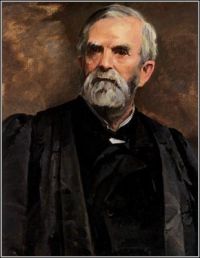
Portrait of William Burnham Woods William Burnham Woods Worley v. Tobacco Company — Opinion of the Court

Suppose Worley had not assigned an interest in his invention to McCabe, and, after obtaining his letters, had brought suit against the latter for infringement, it is perfectly clear that McCabe could have defended the suit successfully on the ground of his own public use of the invention for two years before the date of the patent. If such defence could be made by McCabe, it could be made by any one else, for the facts relied on would render the patent void.
Source: Wikisource

Portrait of William Burnham Woods William Burnham Woods Worley v. Tobacco Company — Opinion of the Court

In 1871 his invention was complete, and in his opinion successful, and was adhered to from that date, without change.
The process was used in the factory of McCabe under the direction of Worley until the application was filed for the patent in 1876, and according to the testimony of McCabe, Worley continued the process for McCabe's benefit, who paid him a salary larger than was usual for his knowledge as a tobacco manufacturer. During all the time from 1870 to 1876 thousands of pounds of tobacco finished by means of this process in the factory of McCabe were sold in the market every year.
Source: Wikisource

Portrait of William Burnham Woods William Burnham Woods Worley v. Tobacco Company — Opinion of the Court

The fact that McCabe, just before the patent was applied for, became the assignee of an interest in it, does not make this defence any the less effectual; for the assignee of a patentright takes it subject to the legal consequences of the previous acts of the patentee. McClurg v. Kingsland, supra.
The inventor cannot relieve himself of the consequences of the prior public use of his patented invention, by assigning an interest in his invention or patent to the person by whom the invention was thus used.
Source: Wikisource

Get perspective with Kwize: daily news enlightened by great literature