Summary

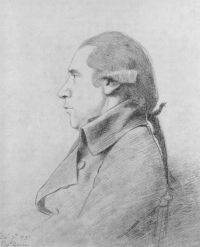
Portrait of William Combe William Combe Letters of the Late Lord Lyttleton (1807)

Upon this they returned to one of their chambers, and had scarce begun to communicate their sentiments to each other, when their conversation was interrupted by a renewal of yells, screams, and shrieks, which, from the horrour of them, seemed to issue from the throats of damned and tortured spirits. They immediately followed the sounds, and traced them to the stranger’s chamber, the door of which they instantly burst open, and found him upon his knees in bed, in the act of scourging himself with the most unrelenting severity, his body streaming with blood.
Source: Wikisource

Portrait of William Combe William Combe Letters of the Late Lord Lyttleton (1807)

The gaudy, awful, and presuming phantom of Papal authority, has long begun to disappear: that blazing meteor, which for so many ages dazzled the superstitious world, verges towards the horizon, and grows pale before the steady, embodied light of liberal, unimpeded science. But I cannot believe, although luxury and dissipation with their concomitant depravities have made such enormous strides among the higher orders, that infidelity in religious matters is a leading characteristick of our times.
Source: Wikisource

Portrait of William Combe William Combe Letters of the Late Lord Lyttleton (1807)

It is impossible but you must immediately withdraw your charge of infidelity against a period which could produce one such implicit believer.
As for myself, I will readily confess to you that I am neither a skeptick nor a believer.—I have enough of skepticism to prevent the throwing my share of faith away: at the same time I feel within me that there is something, which I cannot very well explain, the belief whereof I ought to cultivate, and from whence I should derive much satisfaction and contentment, could I but frame my mind to the purpose.
Source: Wikisource

Get perspective with Kwize: daily news enlightened by great literature