Summary

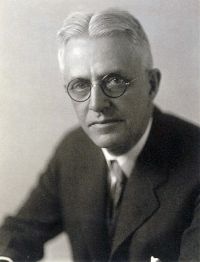
Portrait of William Draper Lewis William Draper Lewis 1911 Encyclopædia Britannica, Volume 17… (1911)

Each year added to his reputation and made for a better appreciation of his intellectual and moral qualities. The bar of the Supreme Court during his chief-justiceship was the most brilliant which the United States has ever known. Leaders, not only of legal, but political thought were among its members; one, Webster, was a man of genius and commanding position. To a very great degree Marshall impressed on the members of this bar and on the profession generally his own ideas of the correct interpretation of the Constitution and his own love for the union.
Source: Wikisource

Portrait of William Draper Lewis William Draper Lewis 1911 Encyclopædia Britannica, Volume 17… (1911)

Maryland, though admitting that the Federal government is one of delegated powers and cannot exercise any power not expressly given in the Constitution, he laid down the rule that Congress in the exercise of a delegated power has a wide latitude in the choice of means, not being confined in its choice of means to those which must be used if the power is to be exercised at all.
Source: Wikisource

Portrait of William Draper Lewis William Draper Lewis 1911 Encyclopædia Britannica, Volume 17… (1911)

It is important to emphasize the fact that Marshall adhered in his opinions to the Constitution as written, not only because it is a fact which must be recognized if we are to understand the correct value of his work in the field of constitutional law, but also because there exists to-day a popular impression that by implication he stretched to the utmost the powers of the Federal government.
Source: Wikisource

Get perspective with Kwize: daily news enlightened by great literature