Summary

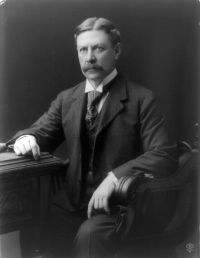
Portrait of William Henry Moody William Henry Moody Londoner v. City and County of Denver…

But where the legislature of a state, instead of fixing the tax itself, commits to some subordinate body the duty of determining whether, in what amount, and upon whom it shall be levied, and of making its assessment and apportionment, due process of law requires that, at some stage of the proceedings, before the tax becomes irrevocably fixed, the taxpayer shall have an opportunity to be heard, of which he must have notice, either personal, by publication, or by a law fixing the time and place of the hearing.
Source: Wikisource

Portrait of William Henry Moody William Henry Moody Londoner v. City and County of Denver…

The tax complained of was assessed under the provisions of the charter of the city of Denver, which confers upon the city the power to make local improvements and to assess the cost upon property specially benefited. It does not seem necessary to set forth fully the elaborate provisions of the charter regulating the exercise of this power, except where they call for special examination. The board of public works, upon the petition of a majority of the owners of the frontage to be assessed, may order the paving of a street.
Source: Wikisource

Portrait of William Henry Moody William Henry Moody Londoner v. City and County of Denver…

Thereupon the city clerk, in compliance with § 30, published a notice, stating, inter alia, that the written complaints or objections of the owners, if filed within thirty days, would be 'heard and determined by the city council before the passage of any ordinance assessing the cost.' Those interested, therefore, were informed that if they reduced their complaints and objections to writing, and filed them within thirty days, those complaints and objections would be heard, and would be heard before any assessment was made.
Source: Wikisource

Get perspective with Kwize: daily news enlightened by great literature