Summary

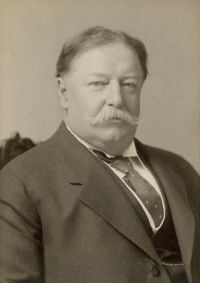
Portrait of William Howard Taft William Howard Taft American Mills Company v. American Surety Company of New York…

The respondent contends that, while this may be correct, the counterclaim growing out of the same transaction must be an equitable claim, and not a legal one, as here. We concur in this view.
The new equity rules were intended to simplify equity pleading and practice by limiting the pleadings to a statement of ultimate facts without evidence and by uniting in one action as many issues as could conveniently be disposed of. But they normally deal with subjects-matter of which, under the dual system of law and equity, courts of equity can properly take cognizance.
Source: Wikisource

Portrait of William Howard Taft William Howard Taft American Mills Company v. American Surety Company of New York…

By the construction which petitioner would put upon rule 30, it is an attempt to compel one who has a cause of action at law to bring it into a court of equity and then try it without a jury whenever the defendant in that cause can find some head of equity jurisdiction under which he can apply for equitable relief in respect of the subject-matter.
Source: Wikisource

Portrait of William Howard Taft William Howard Taft American Mills Company v. American Surety Company of New York…

The counterclaim and the set-off and counterclaim in the two clauses are in pari materia except that the first grows out of the subject-matter of the bill and the other does not. That which grows out of the subject-matter of the bill must be set up in the interest of an end of litigation. That which does not may be set up if the defendant wishes in one proceeding in equity quickly to settle all equitable issues capable of trial between them in such a proceeding, even though they are not related.
Source: Wikisource

Get perspective with Kwize: daily news enlightened by great literature